Category: News

SSbD4CheM_KOM_BelgianPlasticPollutionCommunity

SSbD4CheM @ Kick-off event of the Belgian Plastic Pollution Research Community (07.07.2026, Ghent, Belgium)

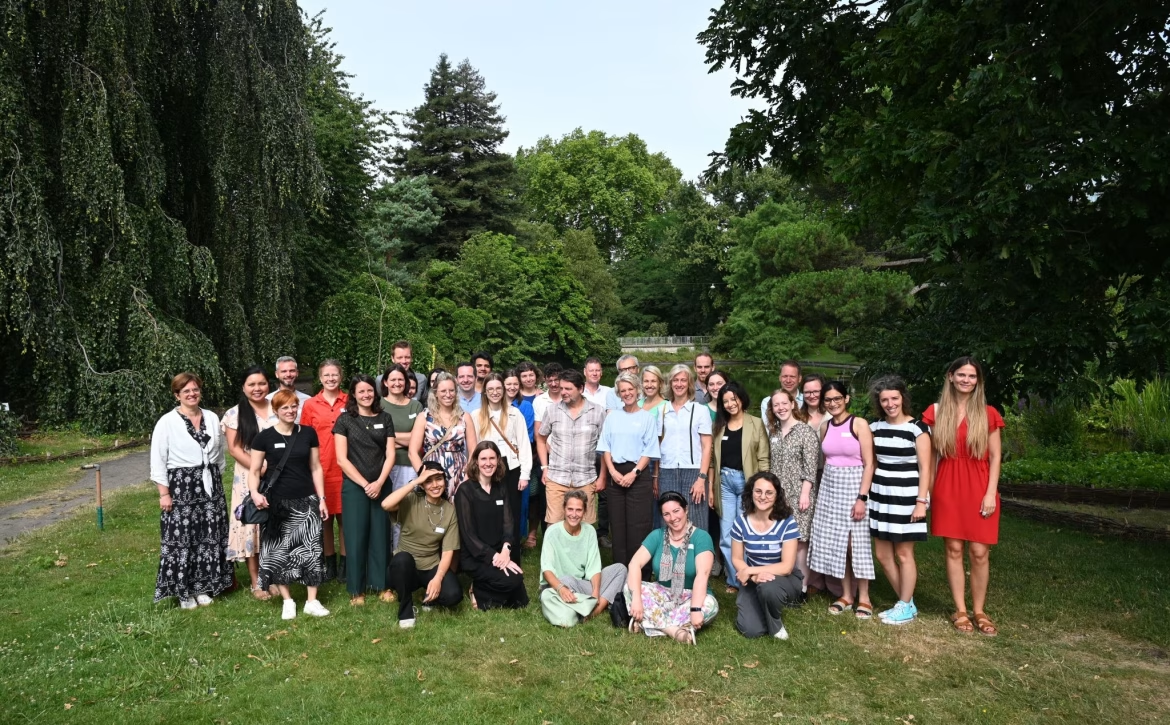
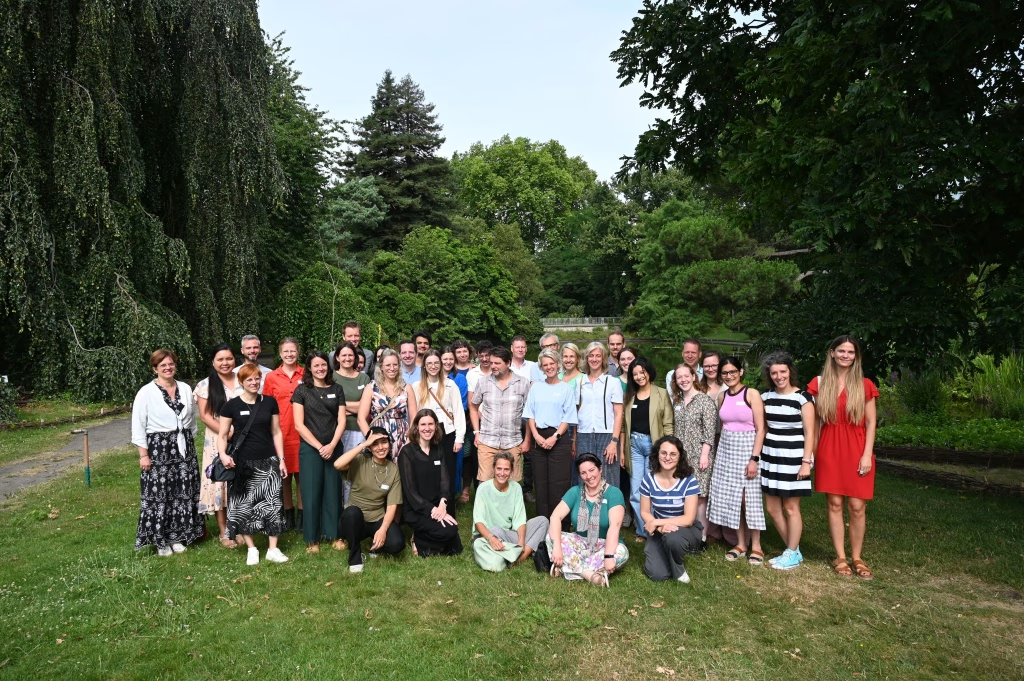
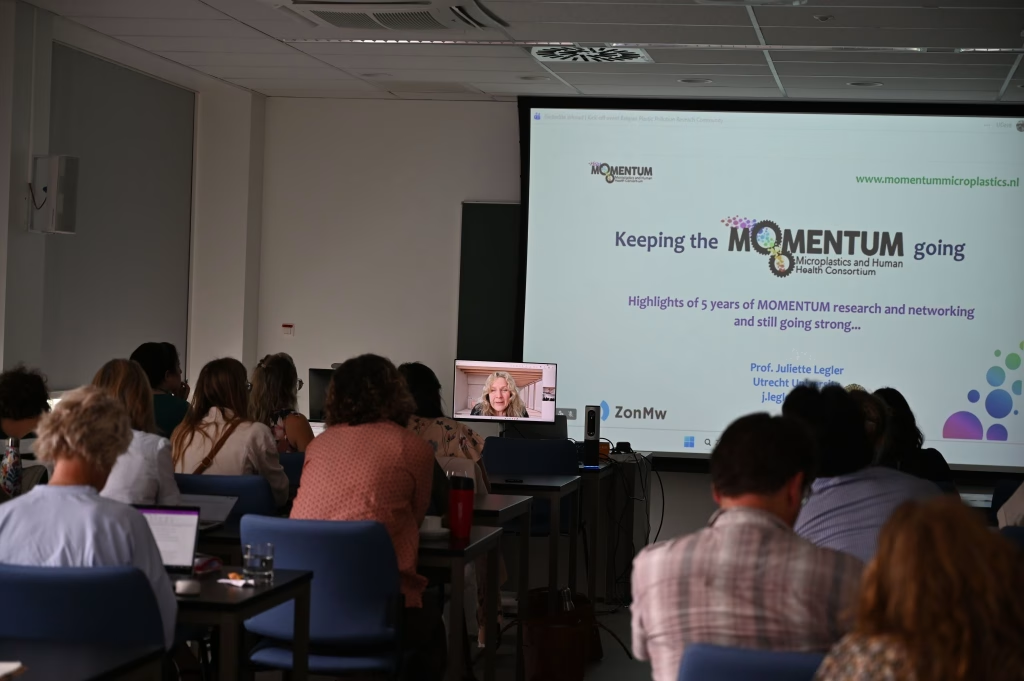
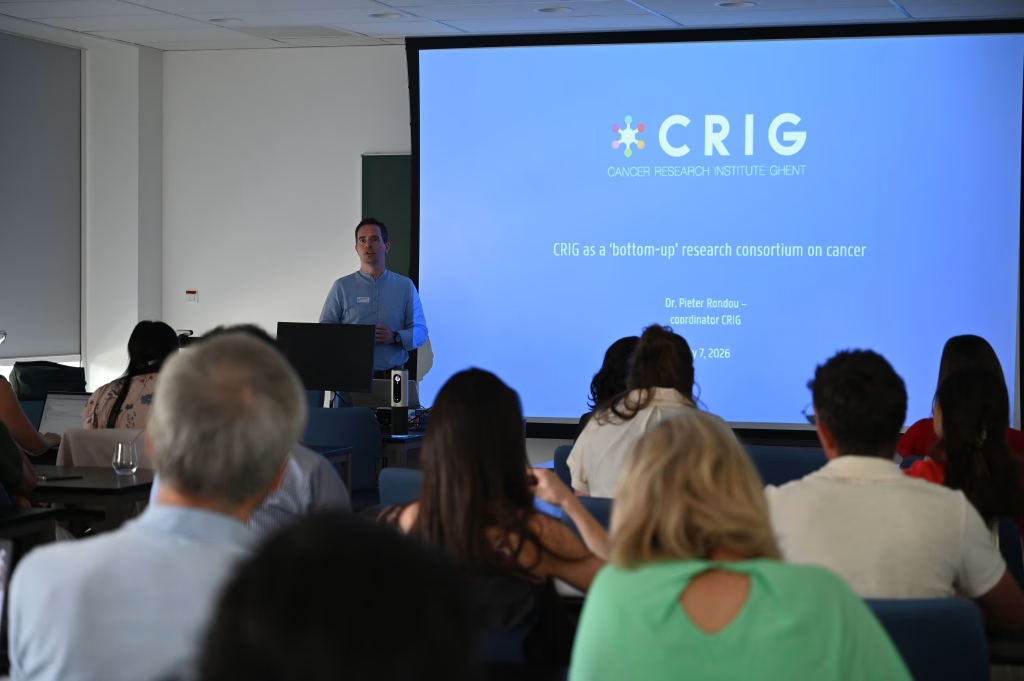
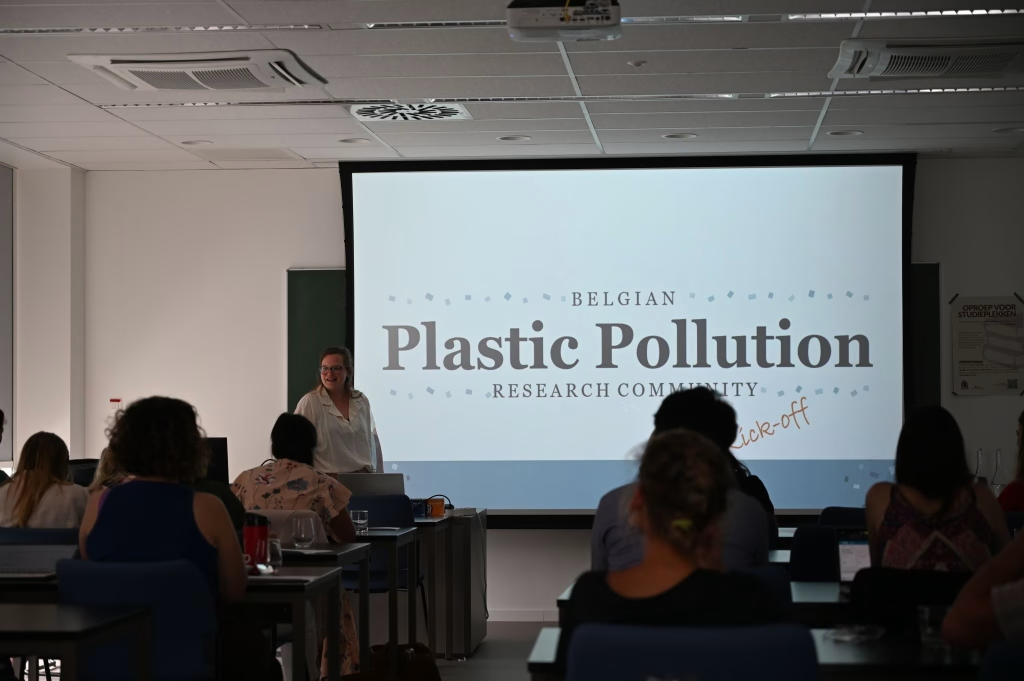
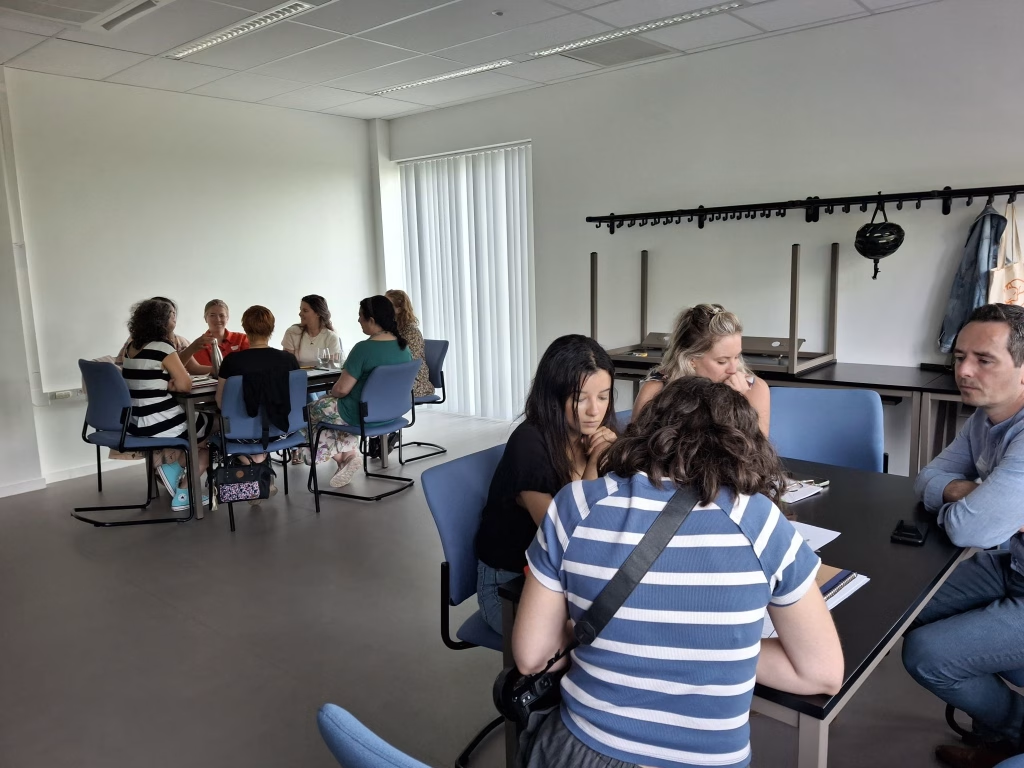
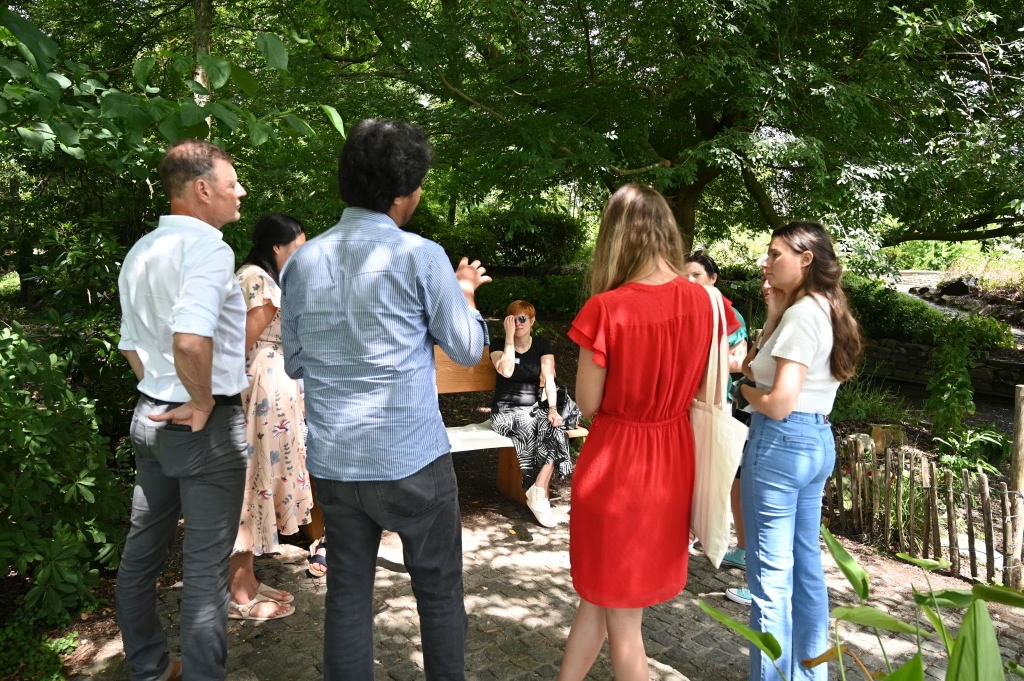
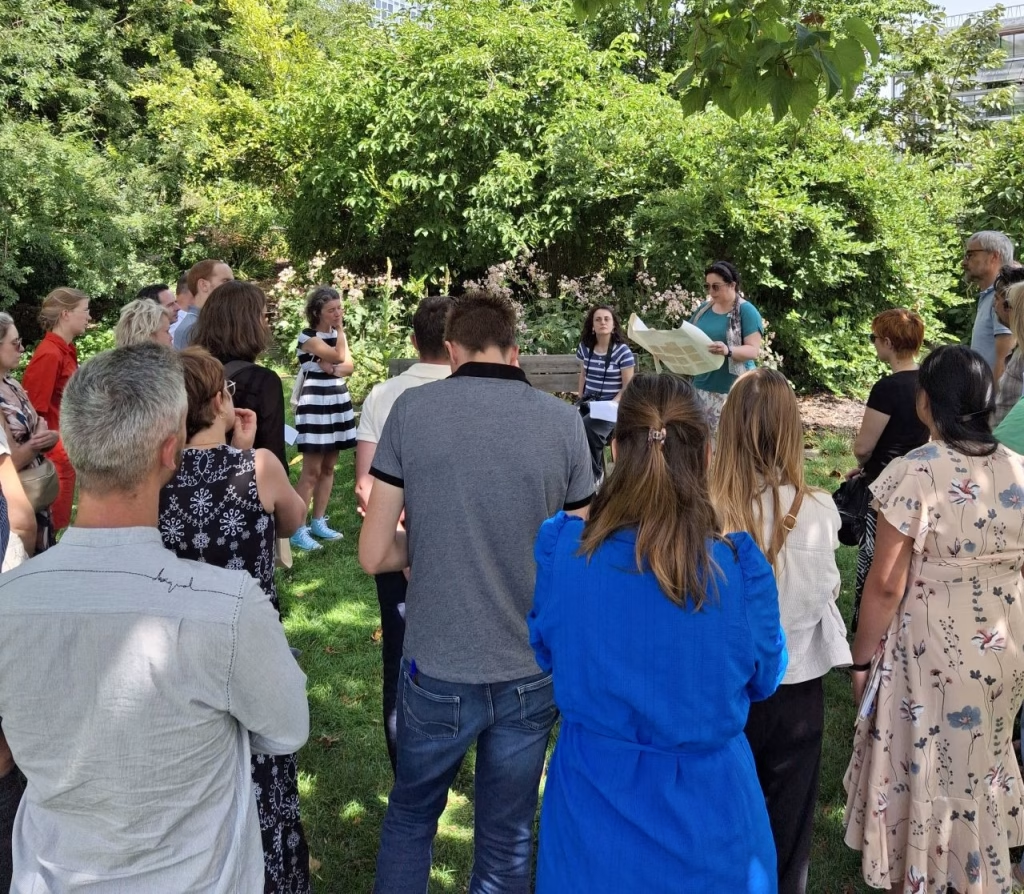
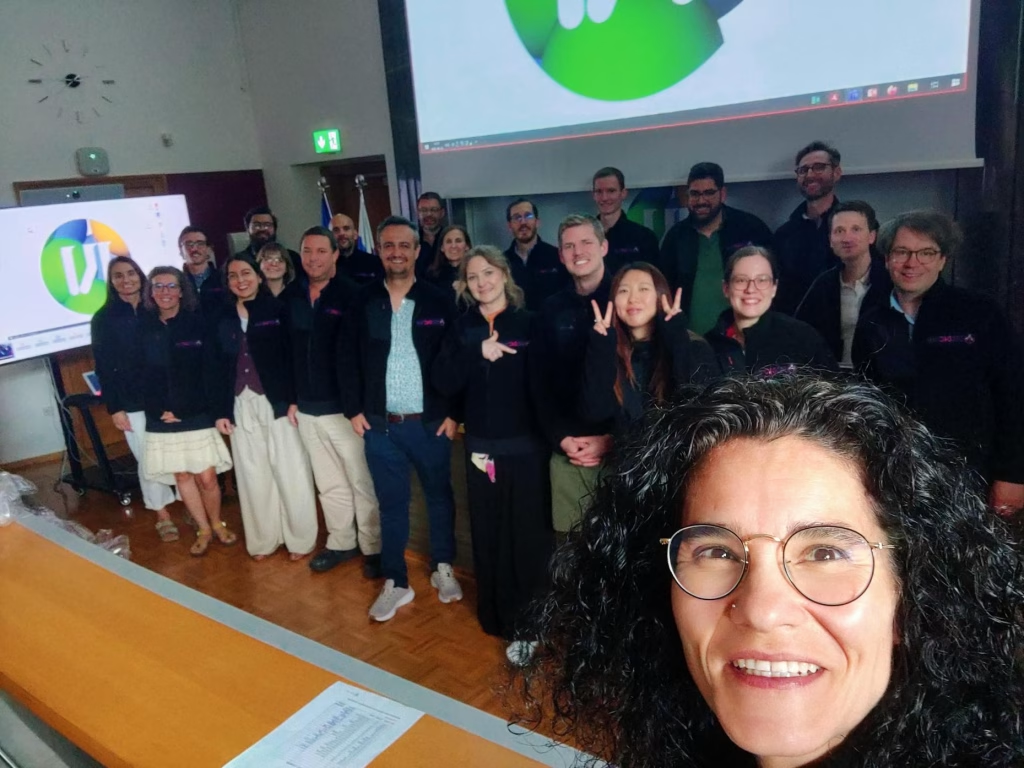
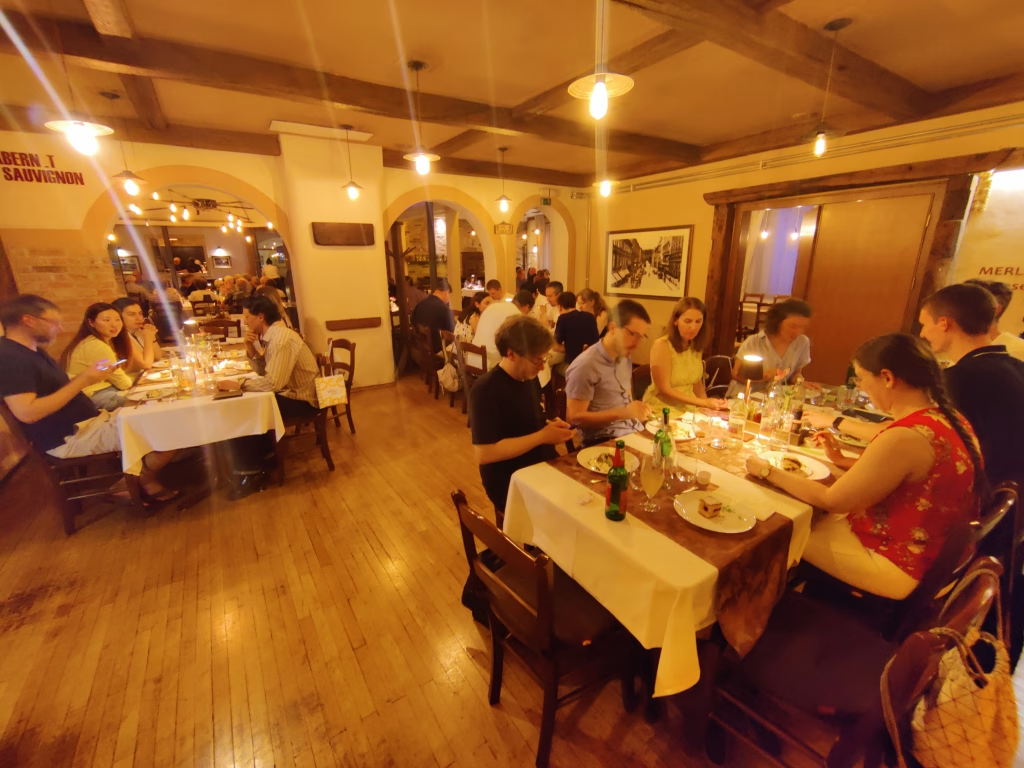
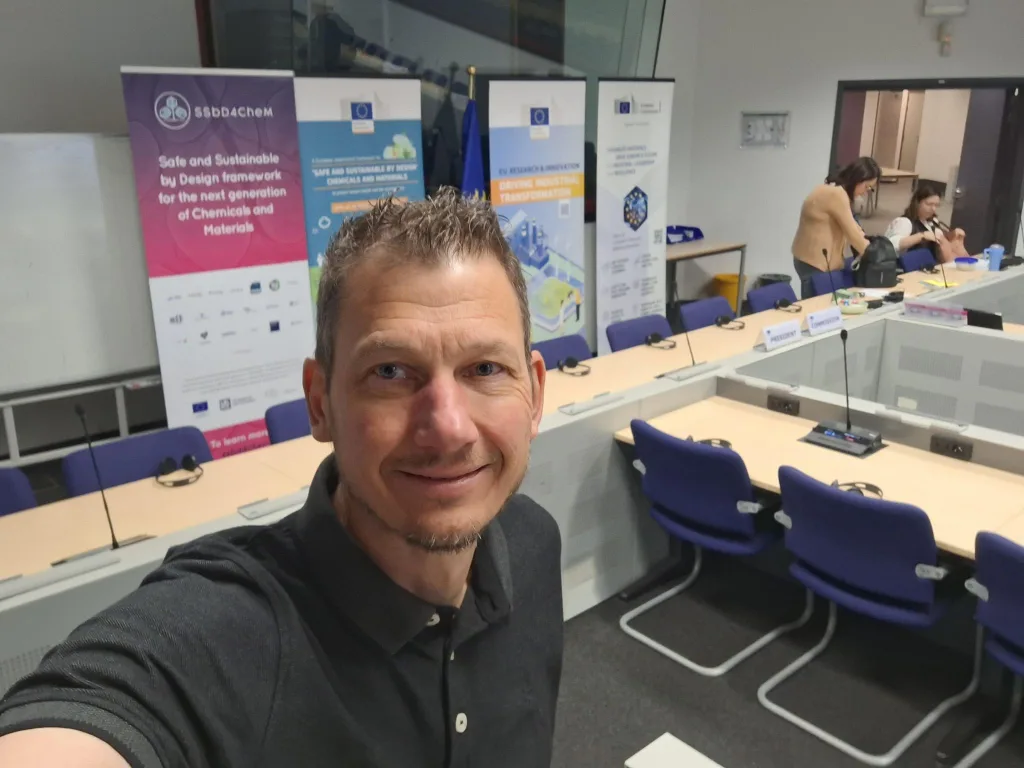
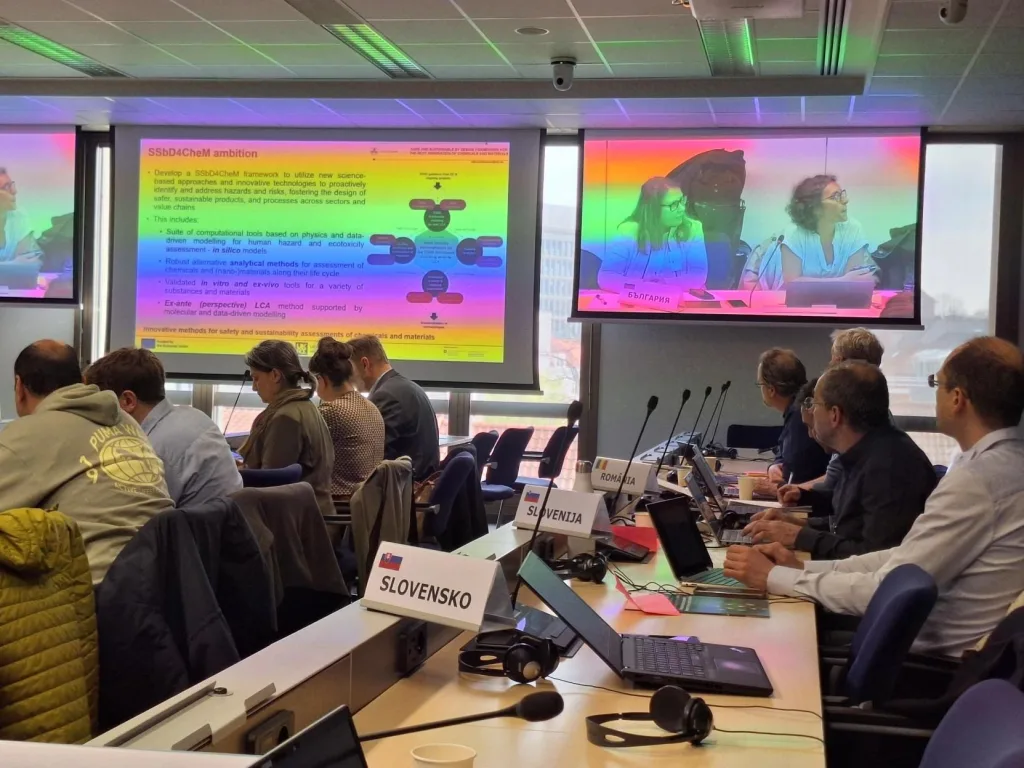
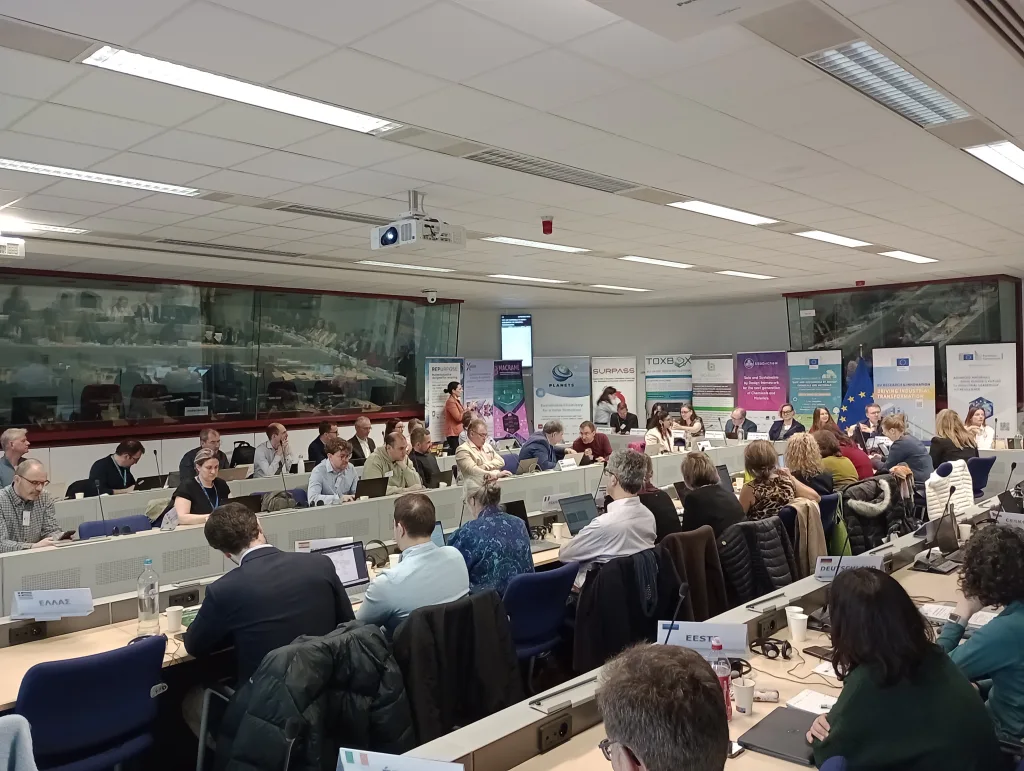
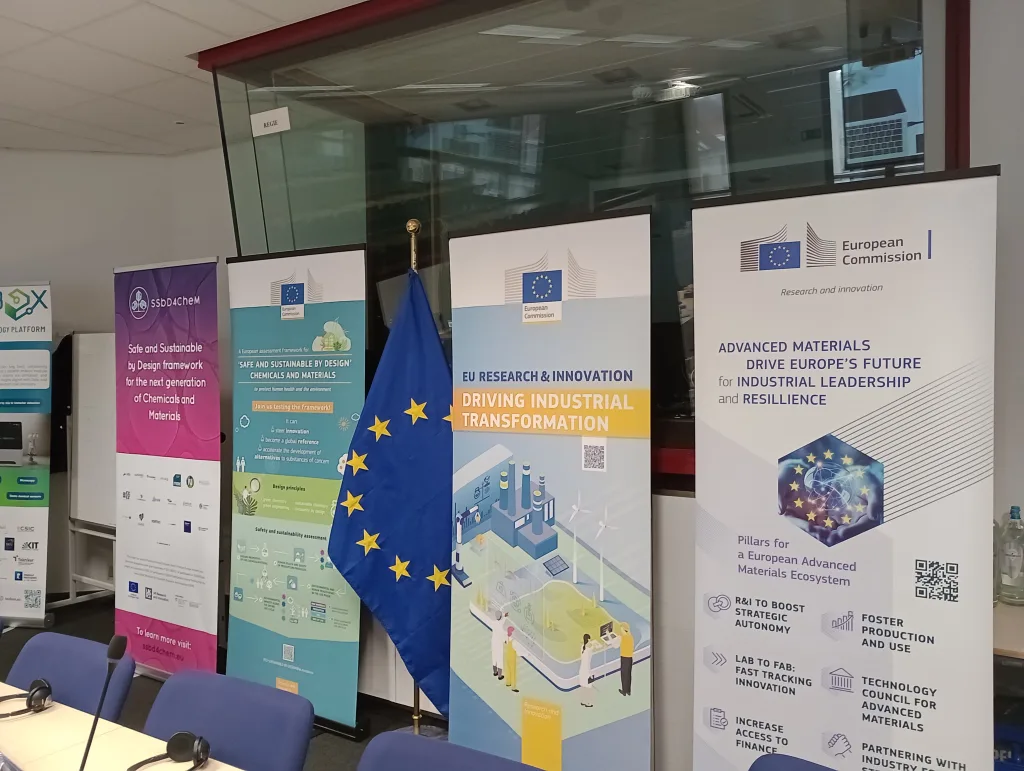
On 7 July 2026, Milica Velimirovic (VITO) participated in the kick-off event of the Belgian Plastic Pollution Research Community (BPPRC) held in Ghent, Belgium. The event gathered over 40 experts from 10 Belgian universities, research institutes, and 3 policy-related bodies.

The BPPRC is a collaborative network of Belgian researchers dedicated to understanding, monitoring, and addressing plastic pollution in Belgian ecosystems and beyond. Their mission is to bring scientists, policymakers, and other relevant stakeholders together to advance knowledge on plastic pollution, understand environmental and human health effects, support risk assessment and mitigation measures, as well as evidence-based solutions for a litter-free environment, and advance the scientific state-of-the-art.

In the meeting, Milica engaged with this interdisciplinary platform in thematic focus groups mapping Belgian expertise in microplastics, ecotoxicological effect studies, and human health risk assessments. By participating in these discussions, Milica also in front of SSbD4CheM advocated for the integration of Safe-and-Sustainable-by-Design (SSbD) principles early in the lifecycle of materials to mitigate the very plastic pollution and toxicity challenges highlighted by the community. 

Read the whole recap on the website of the Belgian Plastic Pollution Research Community.

SSbD4CheM_KOM_BelgianPlasticPollutionCommunity
SSbD4CheM_KOM_BelgianPlasticPollutionCommunity4
SSbD4CheM_KOM_BelgianPlasticPollutionCommunity5
SSbD4CheM_KOM_BelgianPlasticPollutionCommunity6
SSbD4CheM_KOM_BelgianPlasticPollutionCommunity2
SSbD4CheM_KOM_BelgianPlasticPollutionCommunity8
SSbD4CheM_KOM_BelgianPlasticPollutionCommunity3

Read More
GroupPic1

SSbD4CheM General Assembly M30 @ Ljubljana (23-24.06.2026)

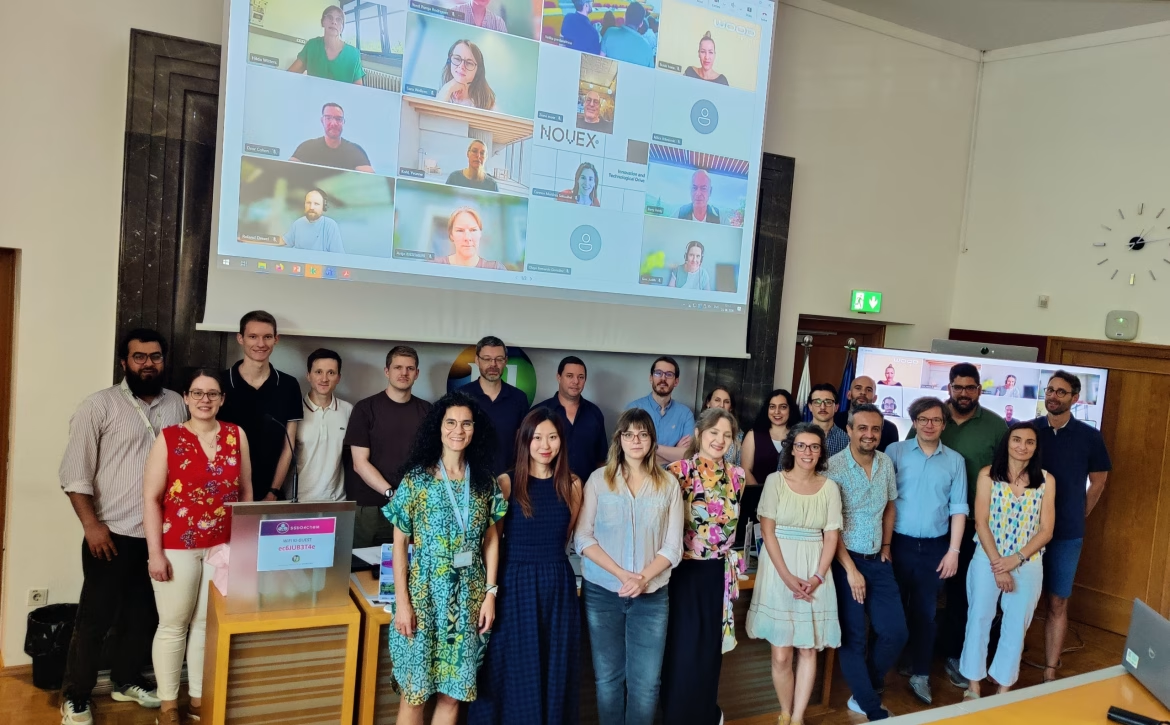
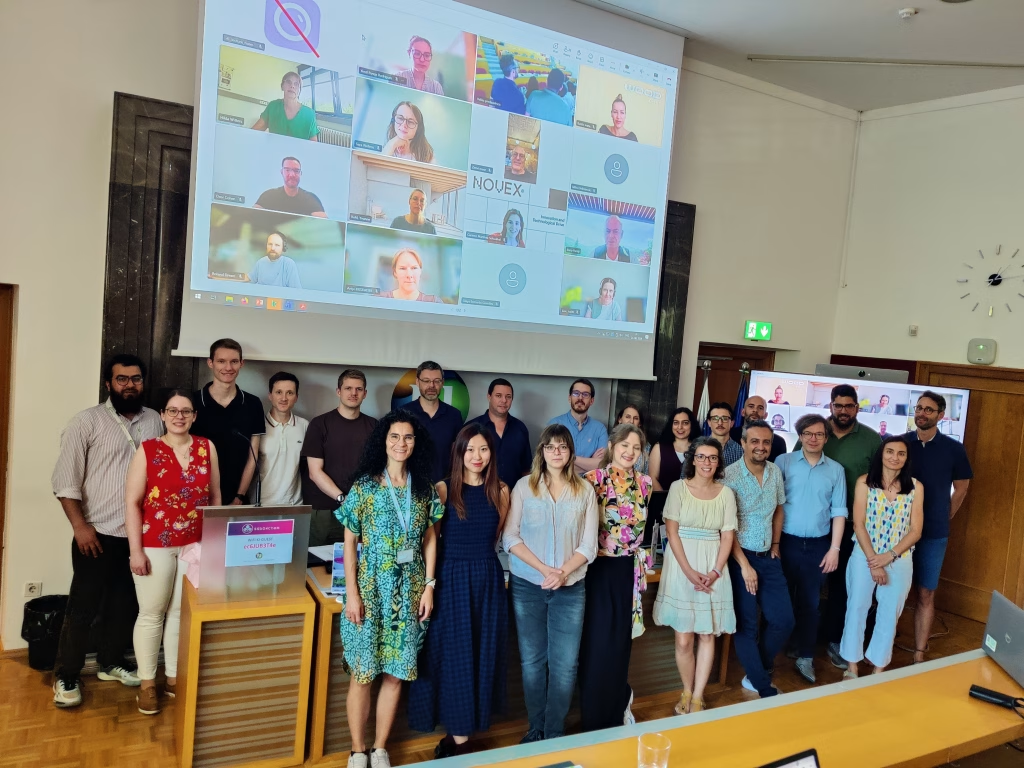
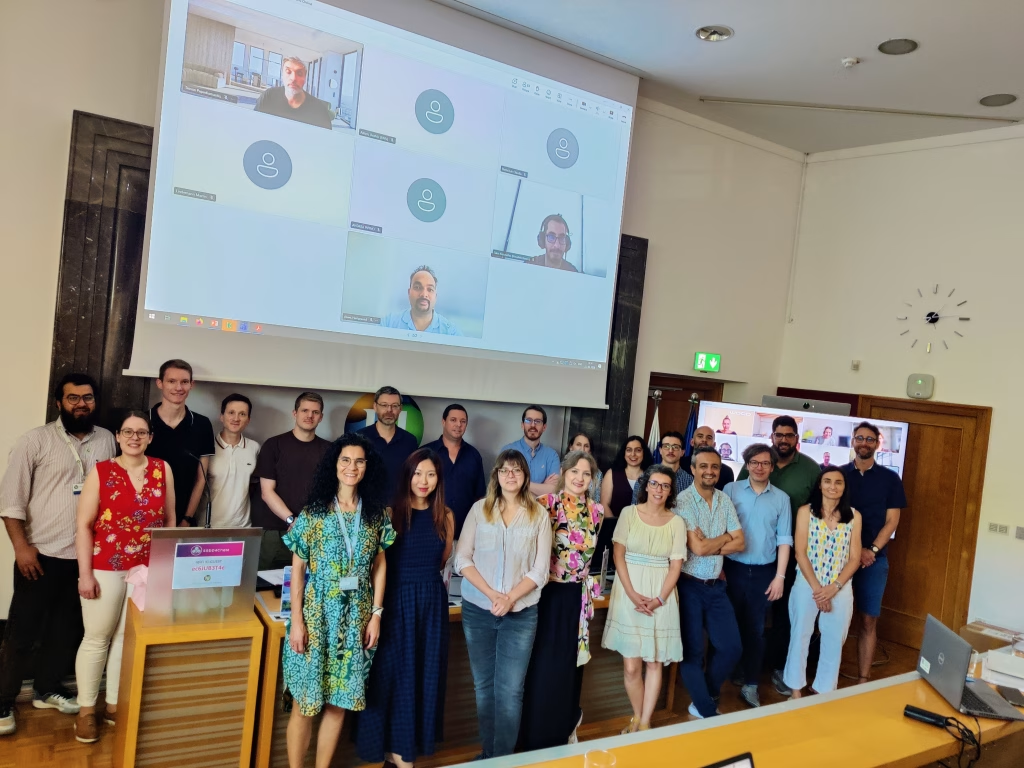
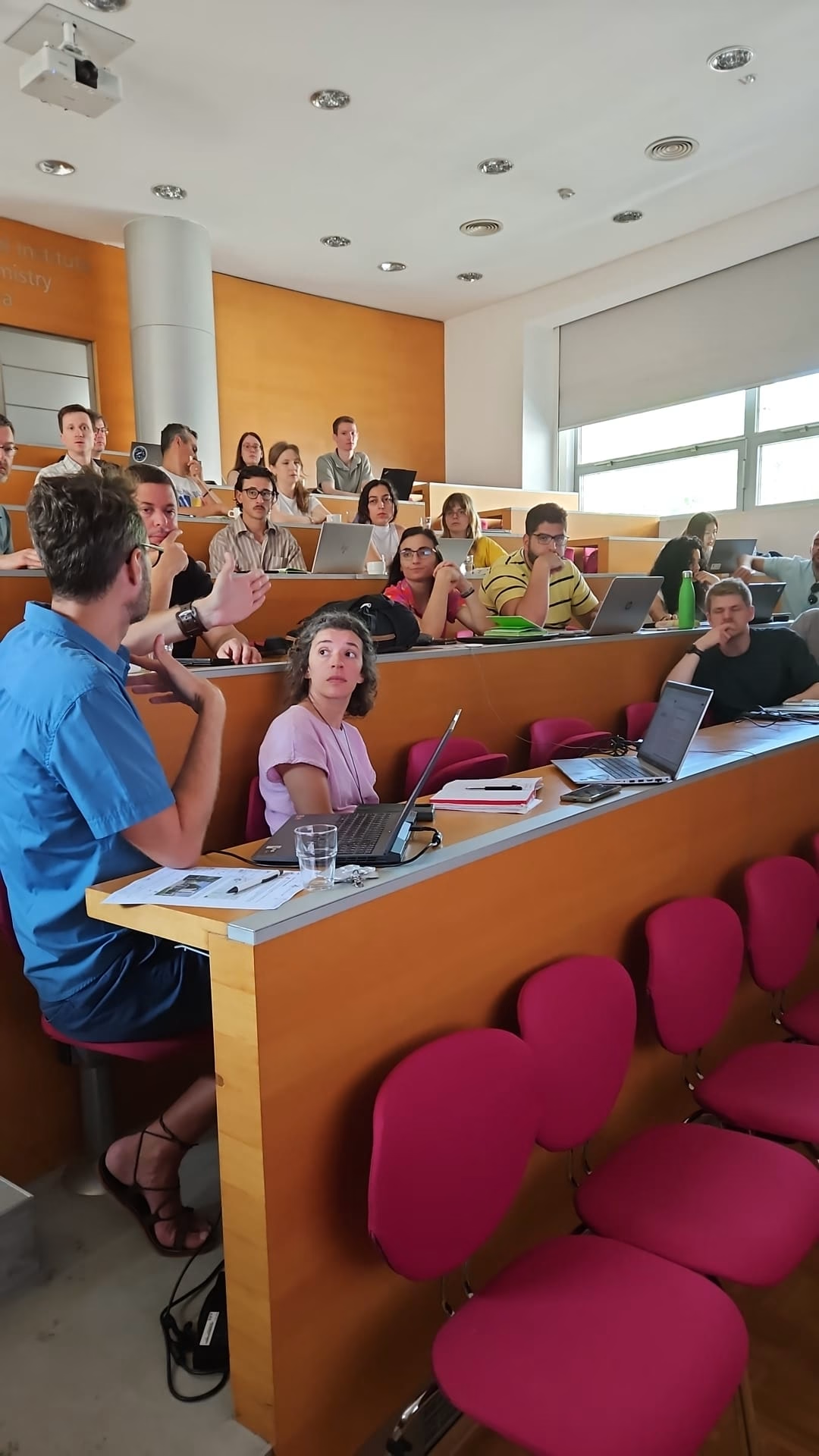
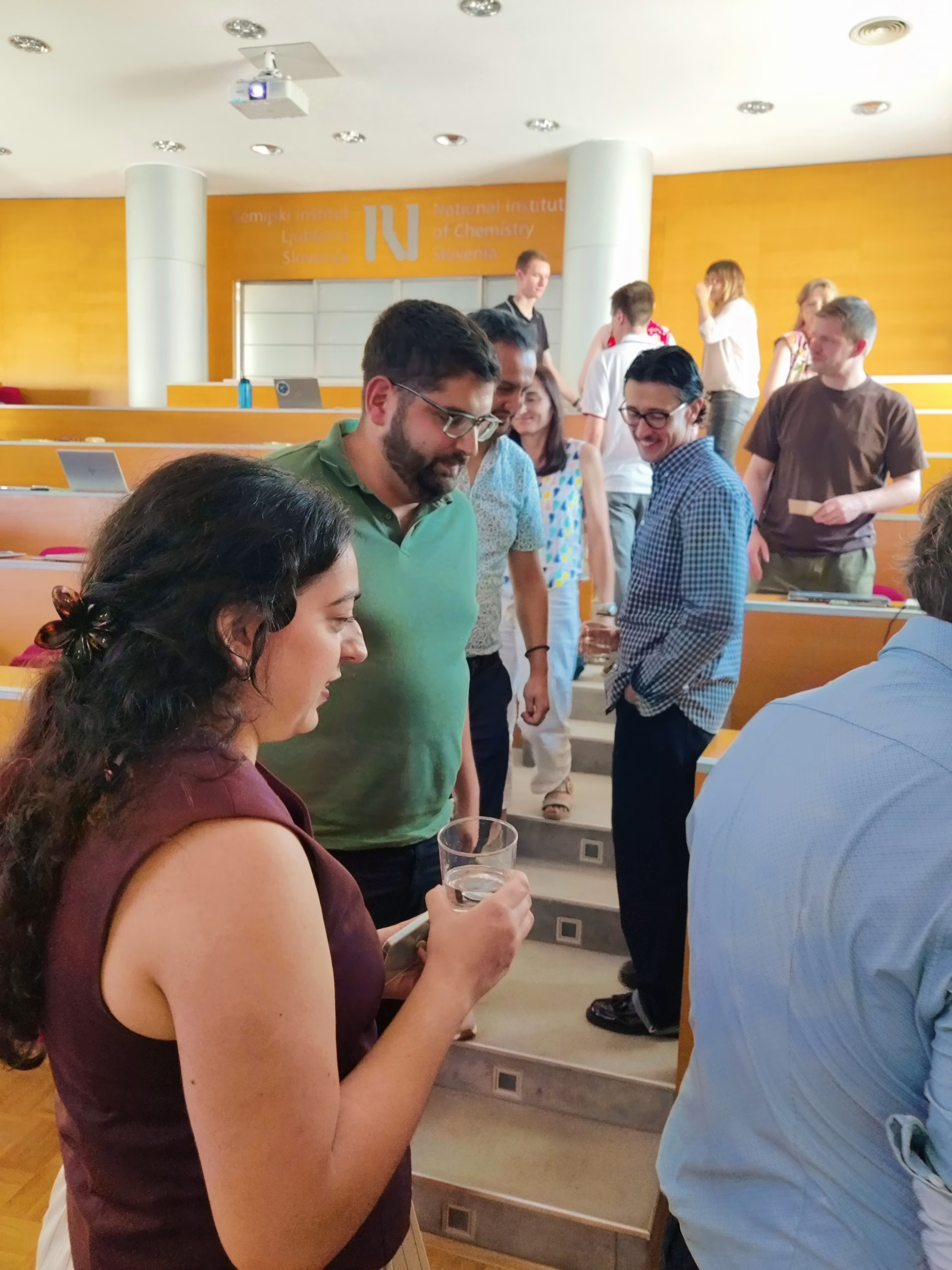
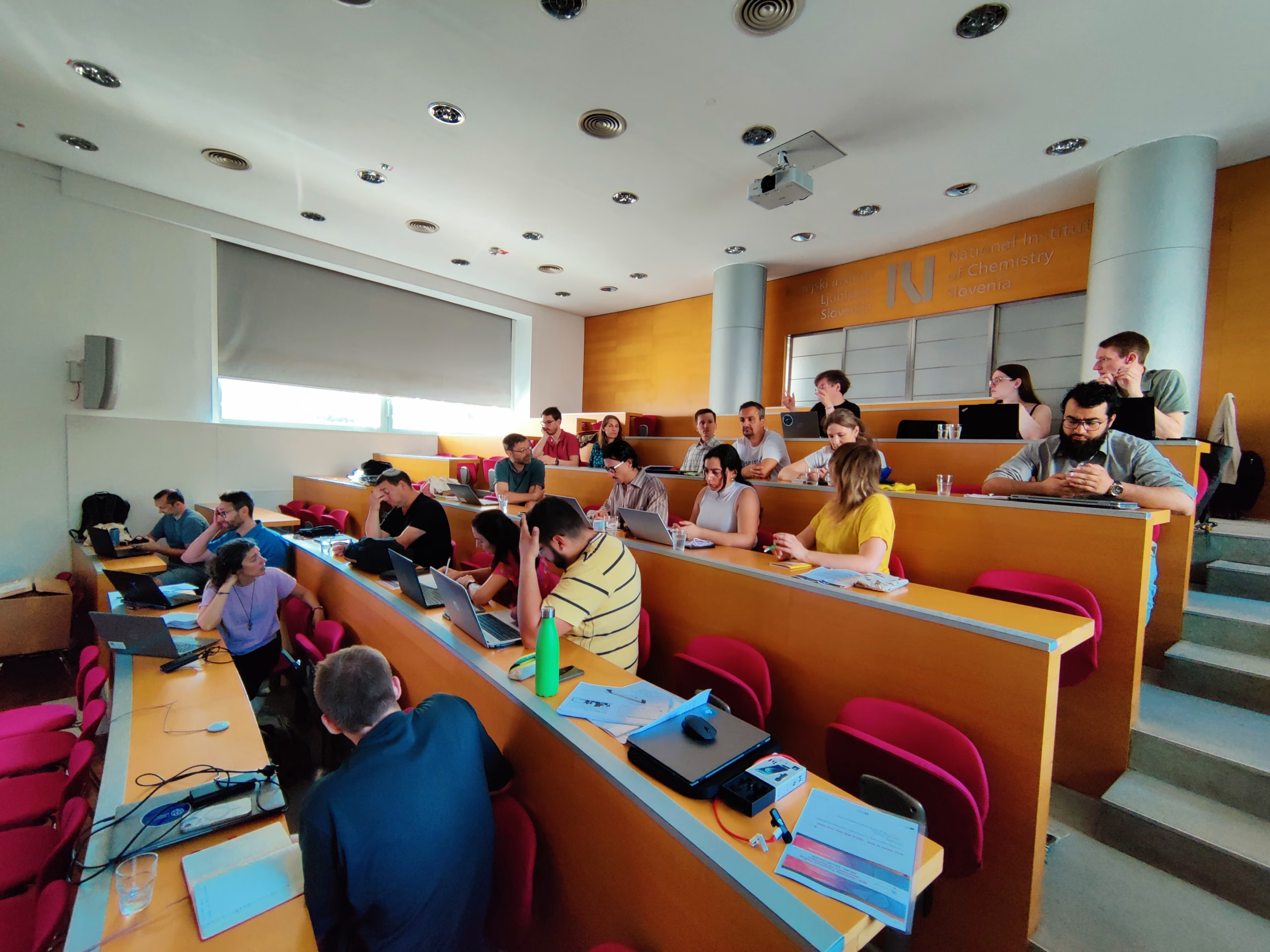
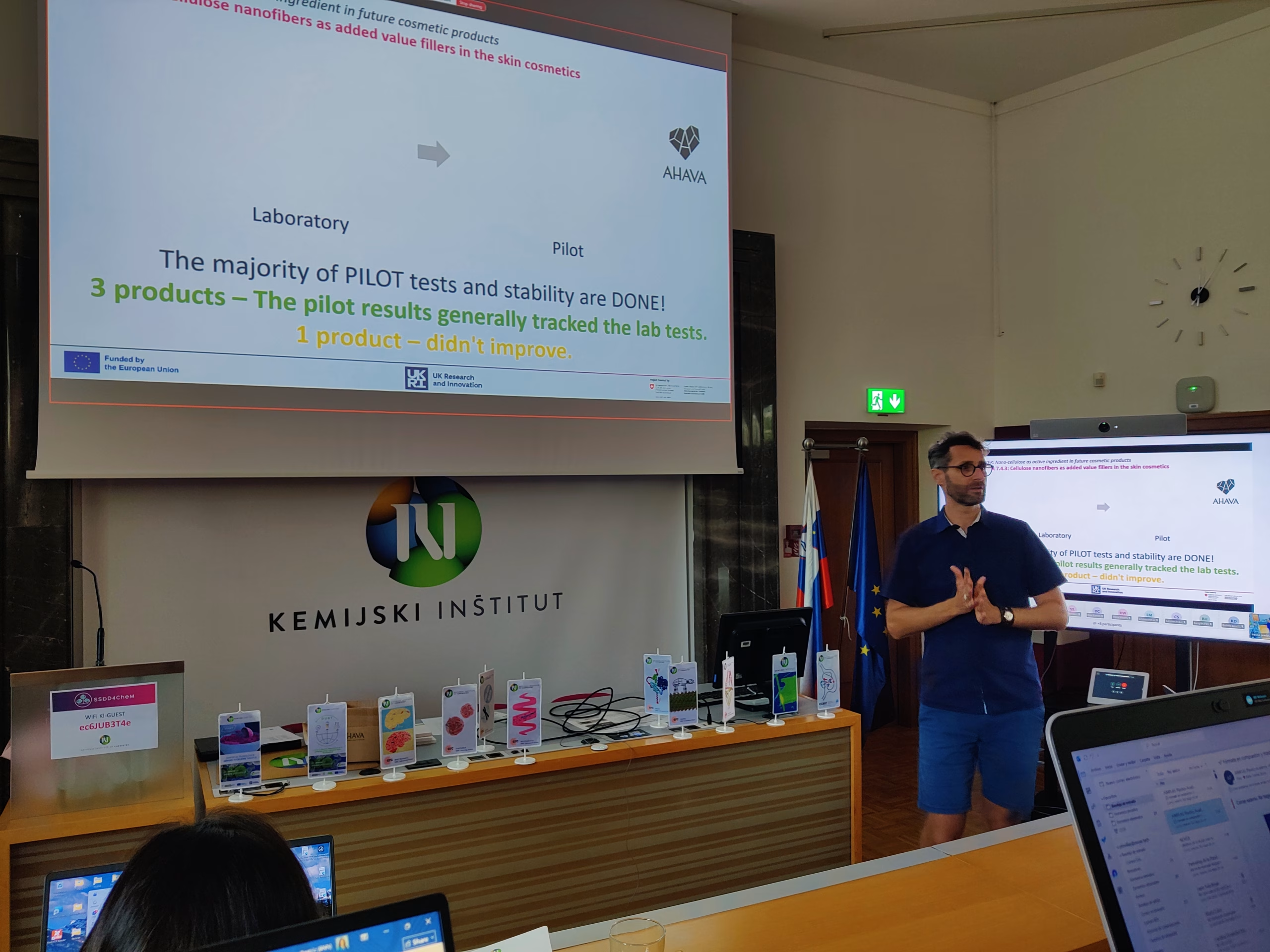
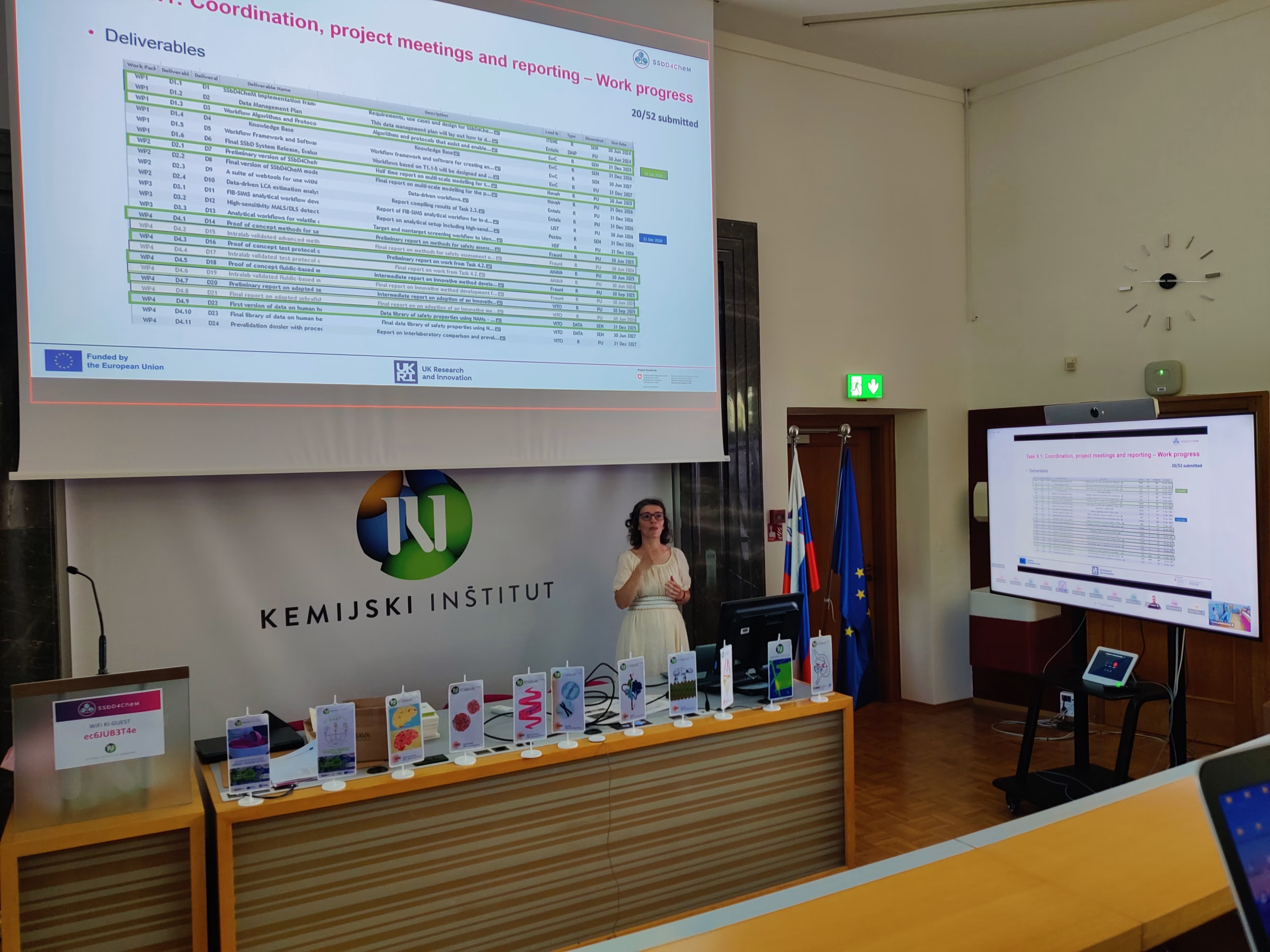
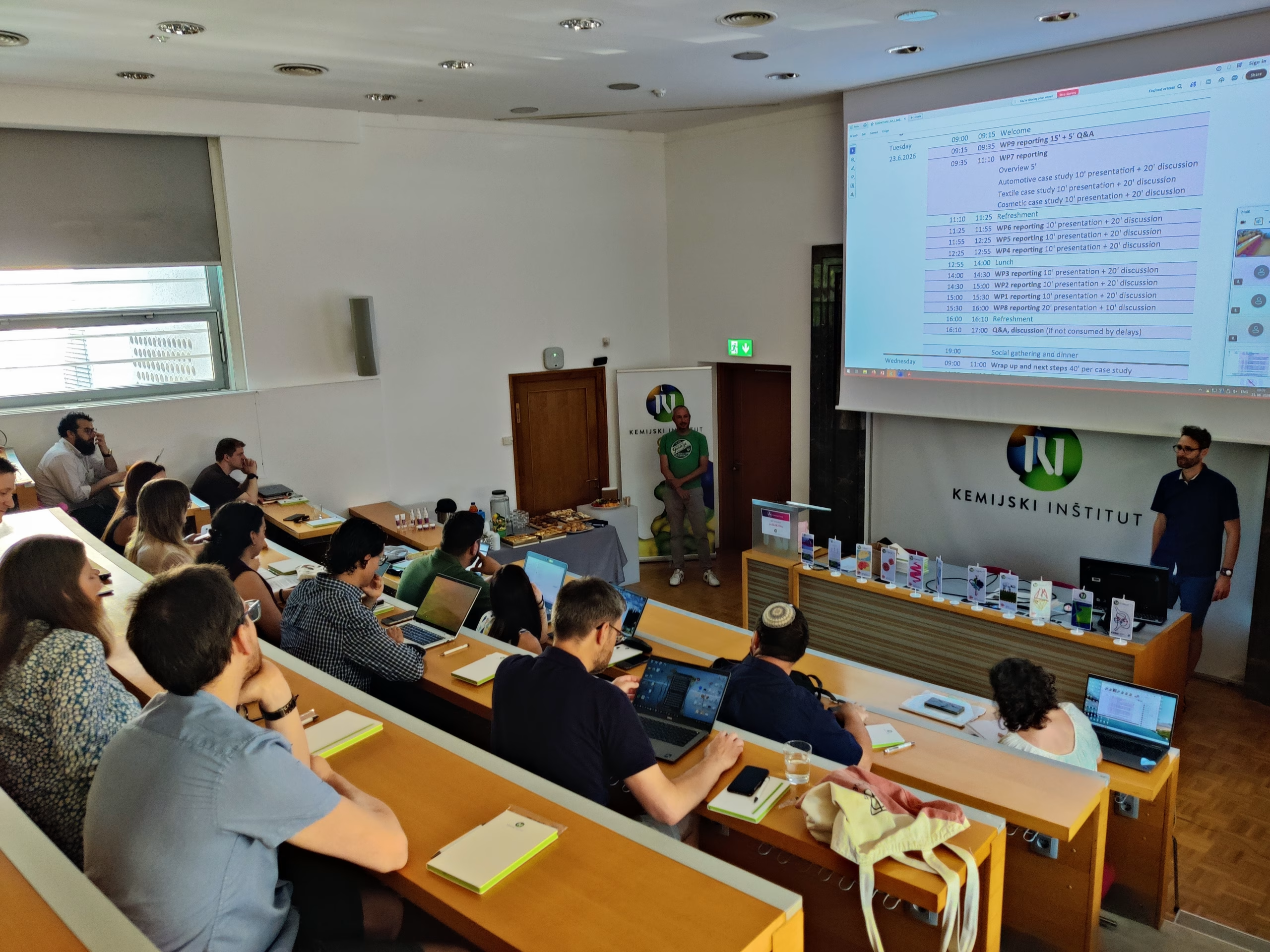
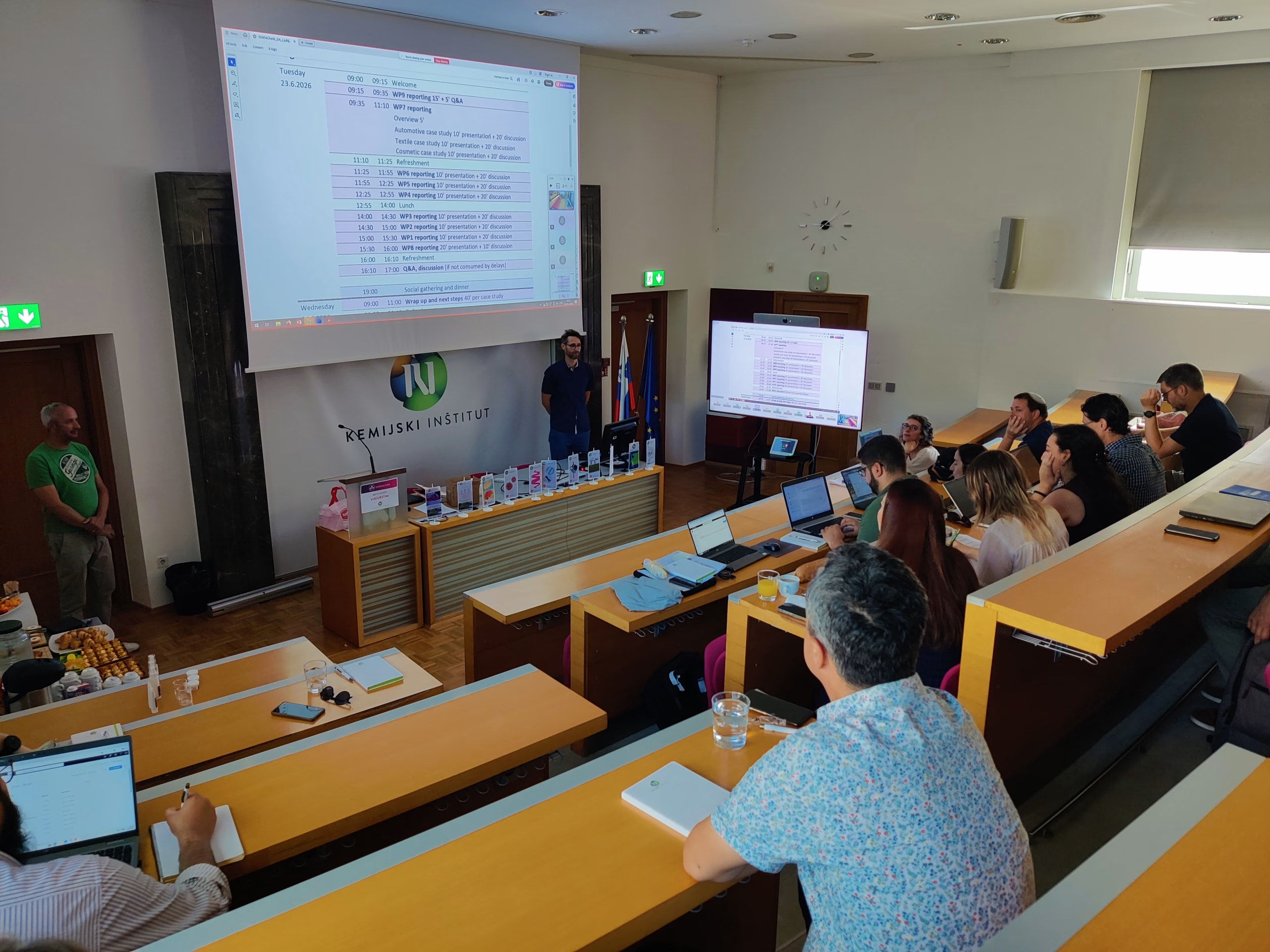
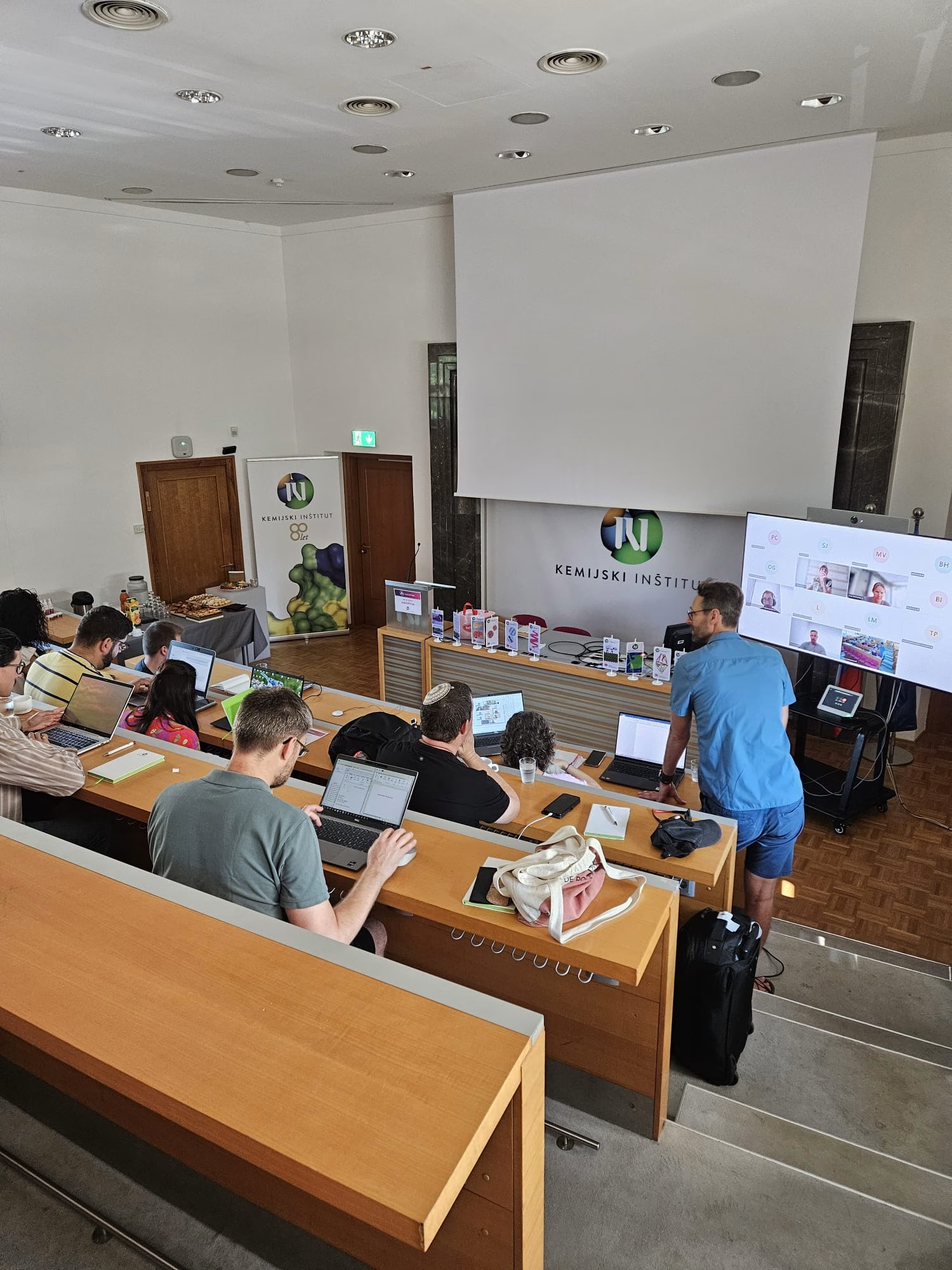
The SSbD4CheM consortium met in Ljubljana, Slovenia, and hybrid, for its M30 General Assembly, bringing together project partners to review the progress achieved over the past six months and preparing strategic actions for the upcoming phase of the project in 2026.

Over two days of discussions, WP and Task leaders shared the latest developments and explored the next steps. The meeting also provided an excellent opportunity to strengthen collaboration, exchange ideas, and reinforce the shared commitment to the project’s objectives.

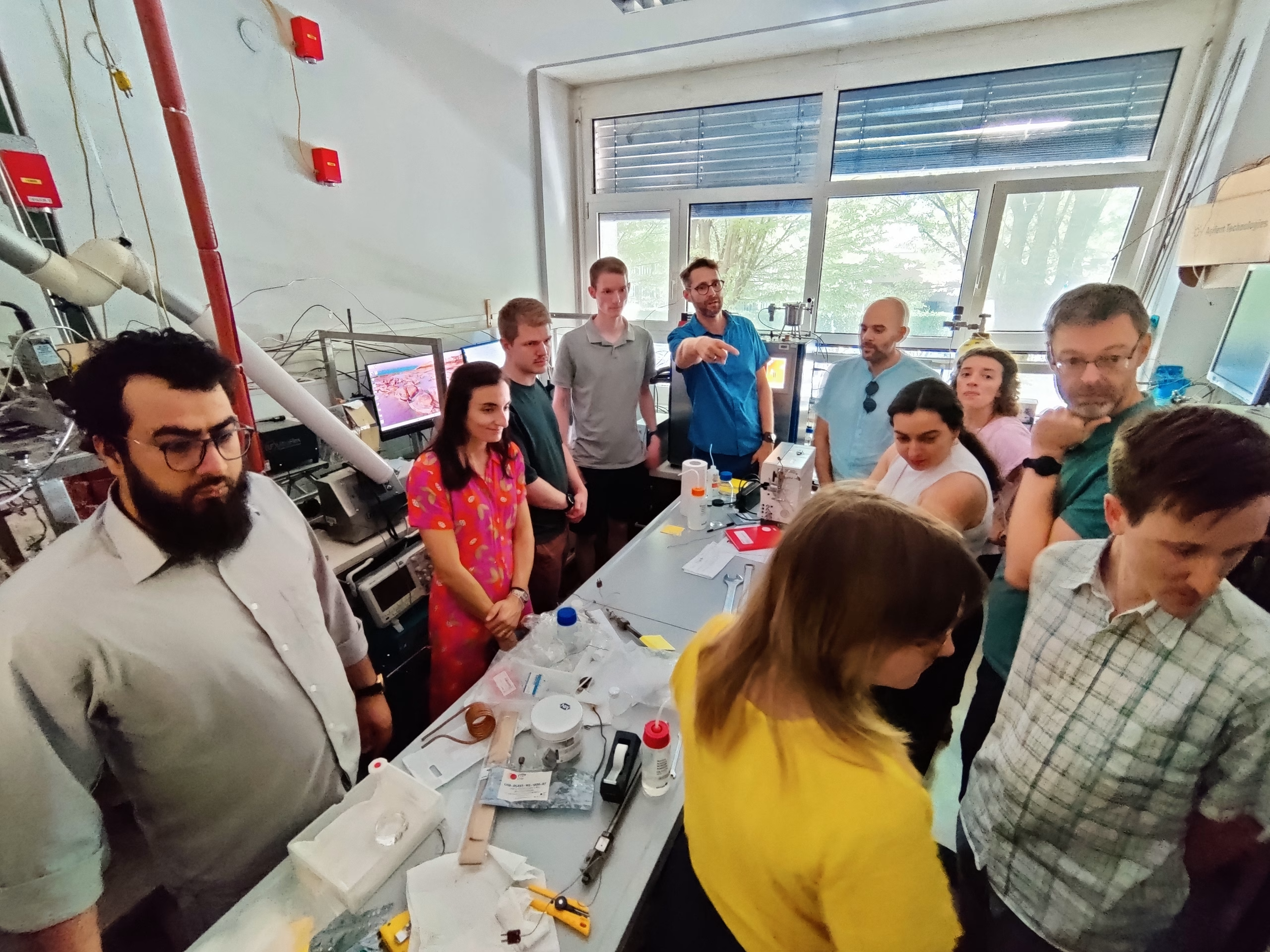
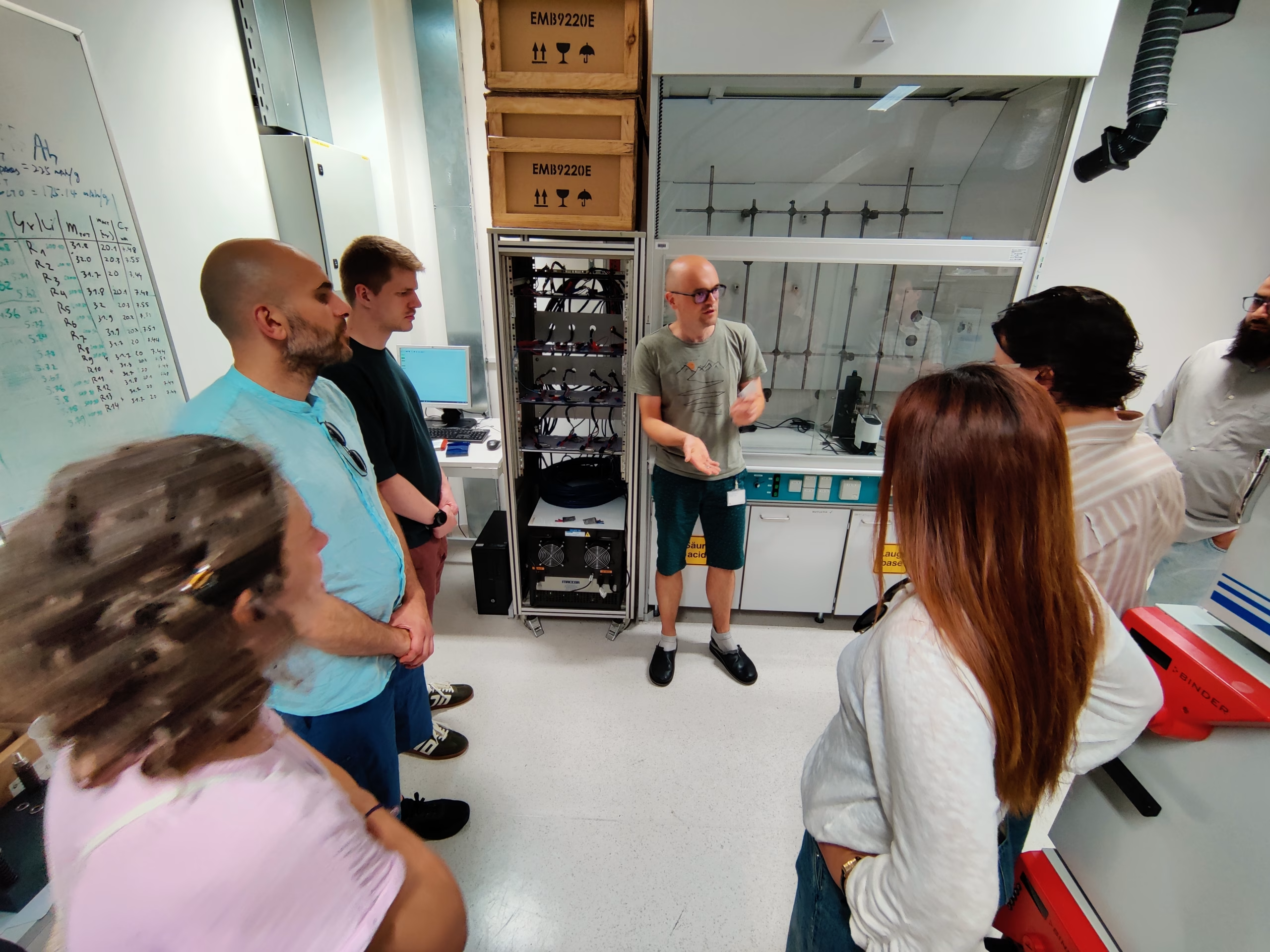
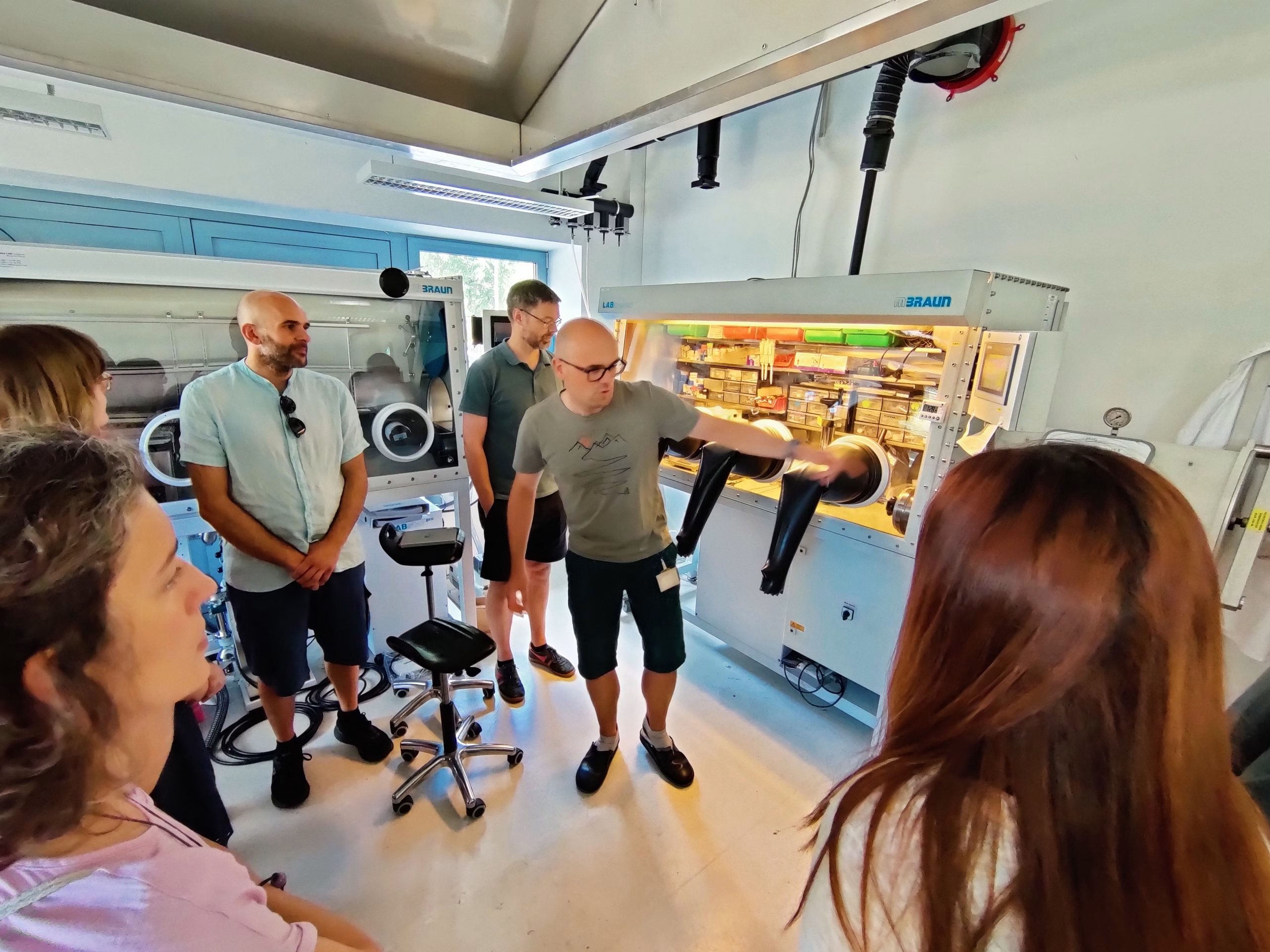
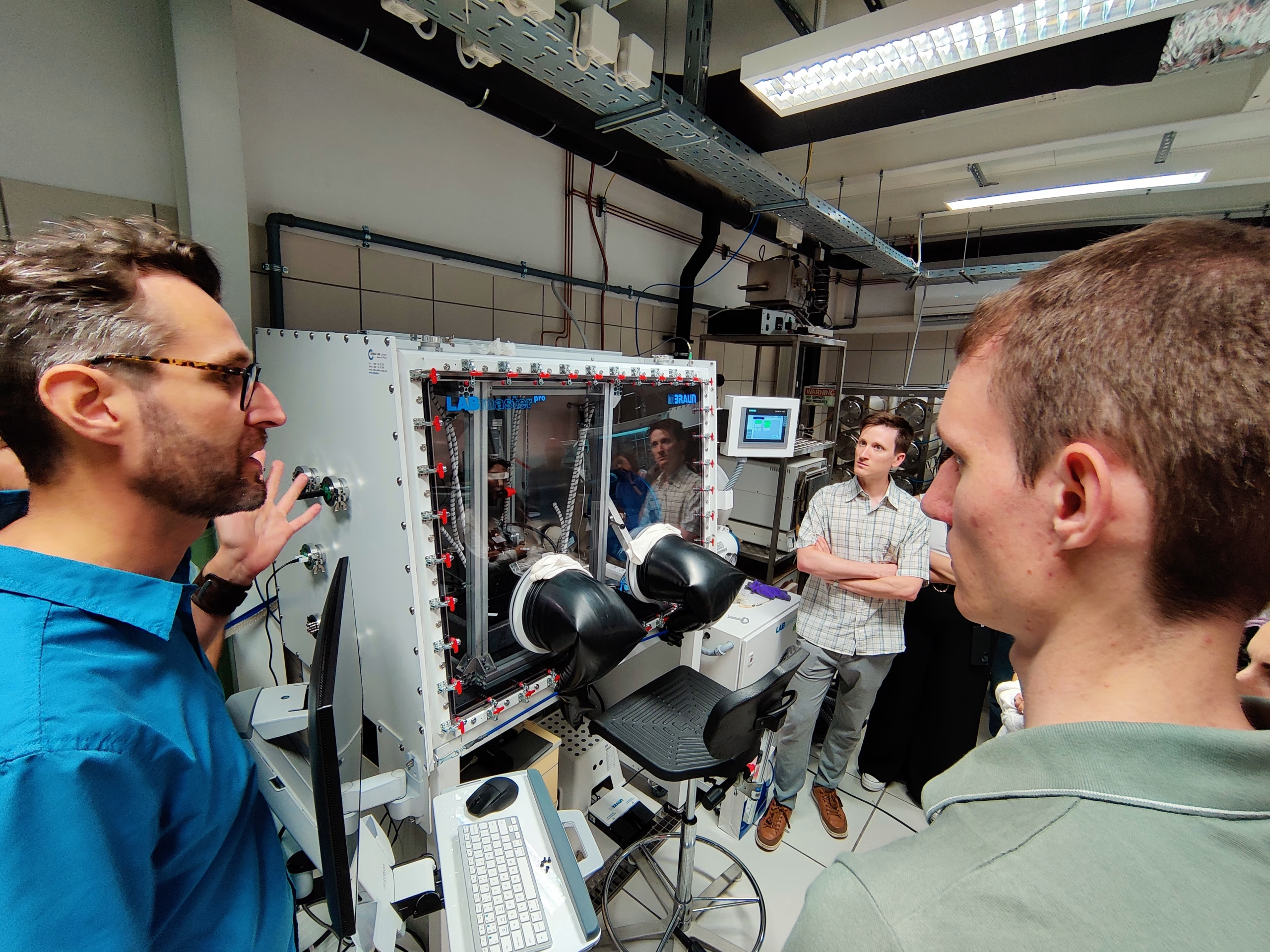
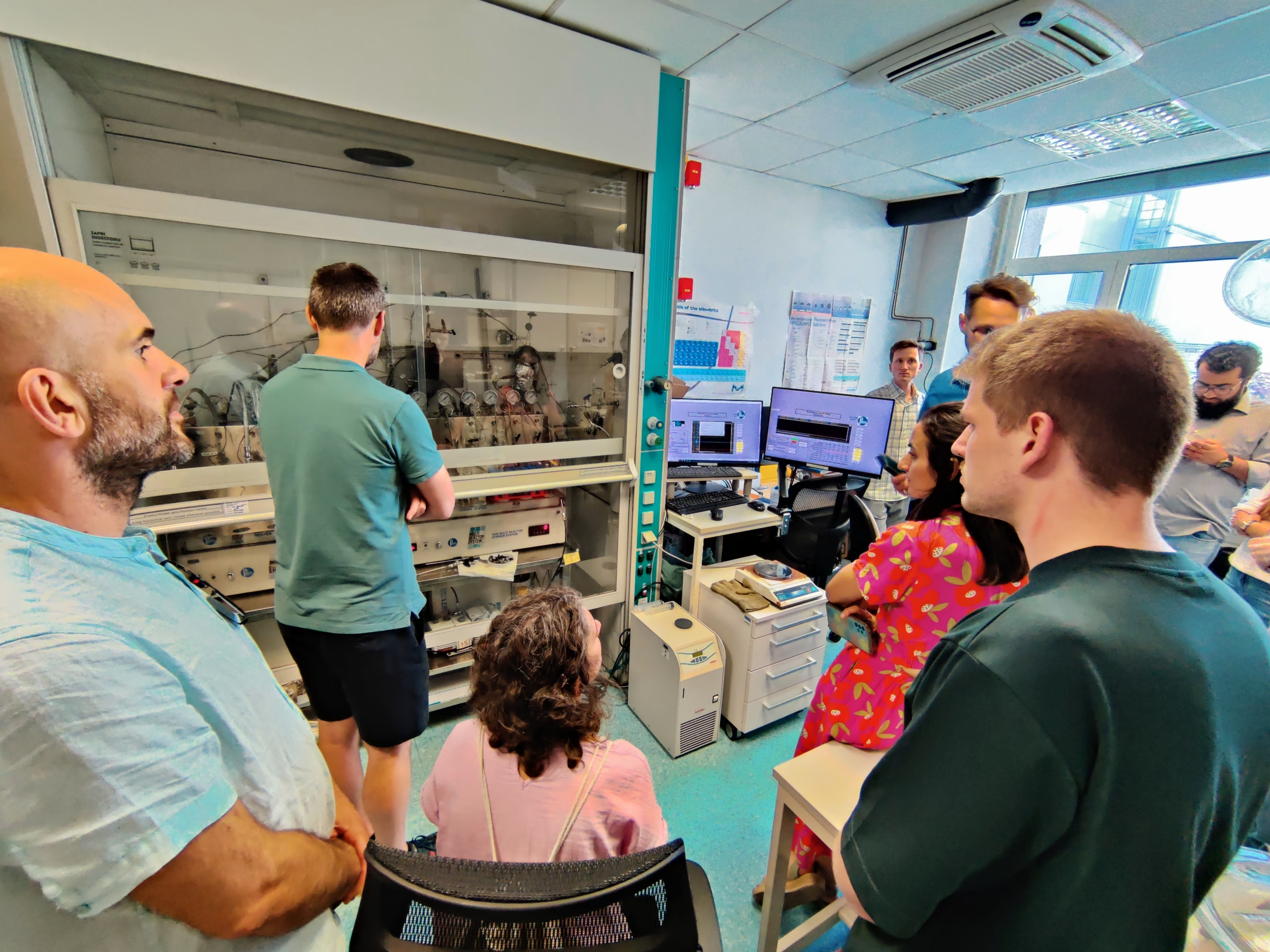
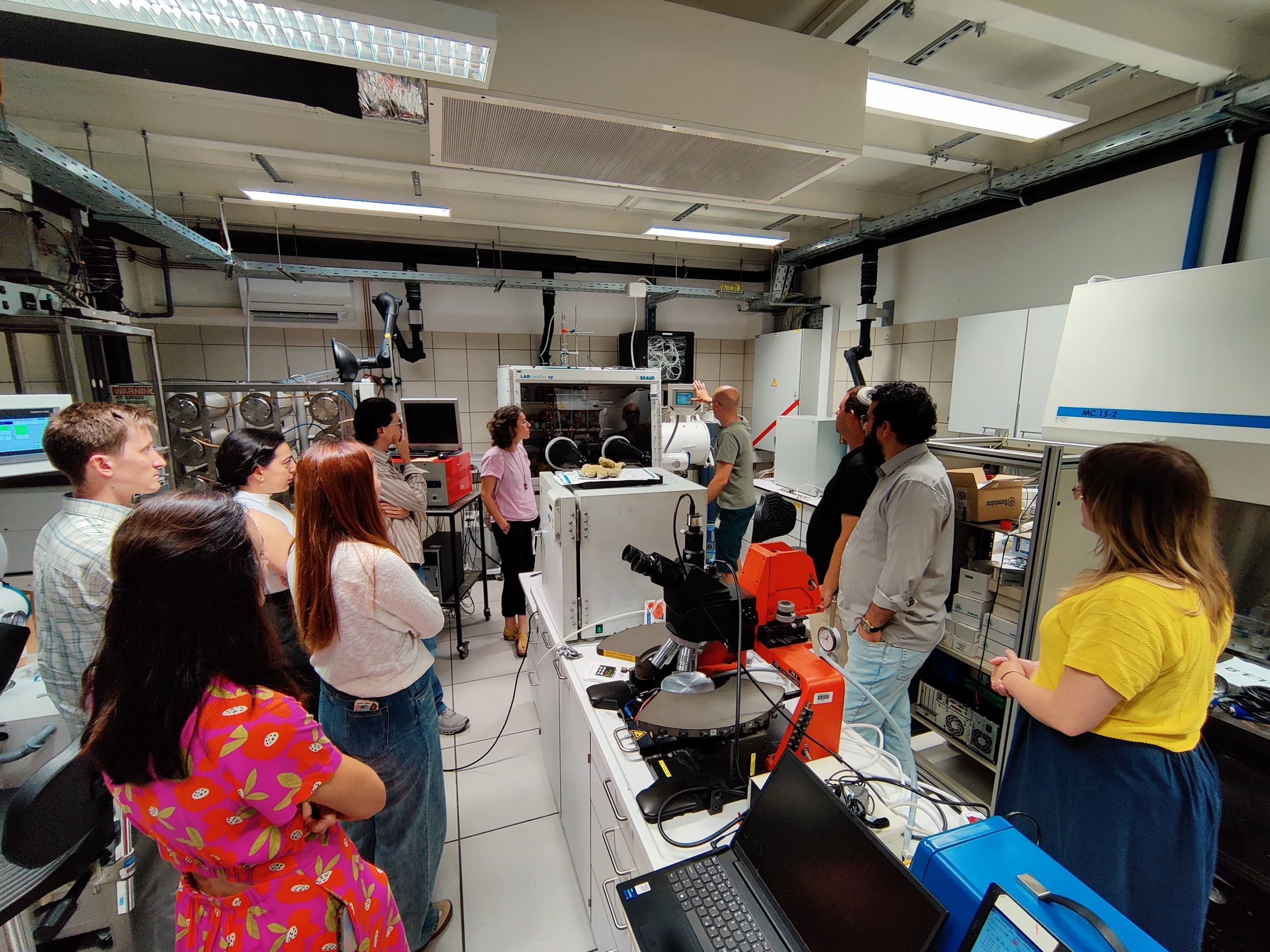
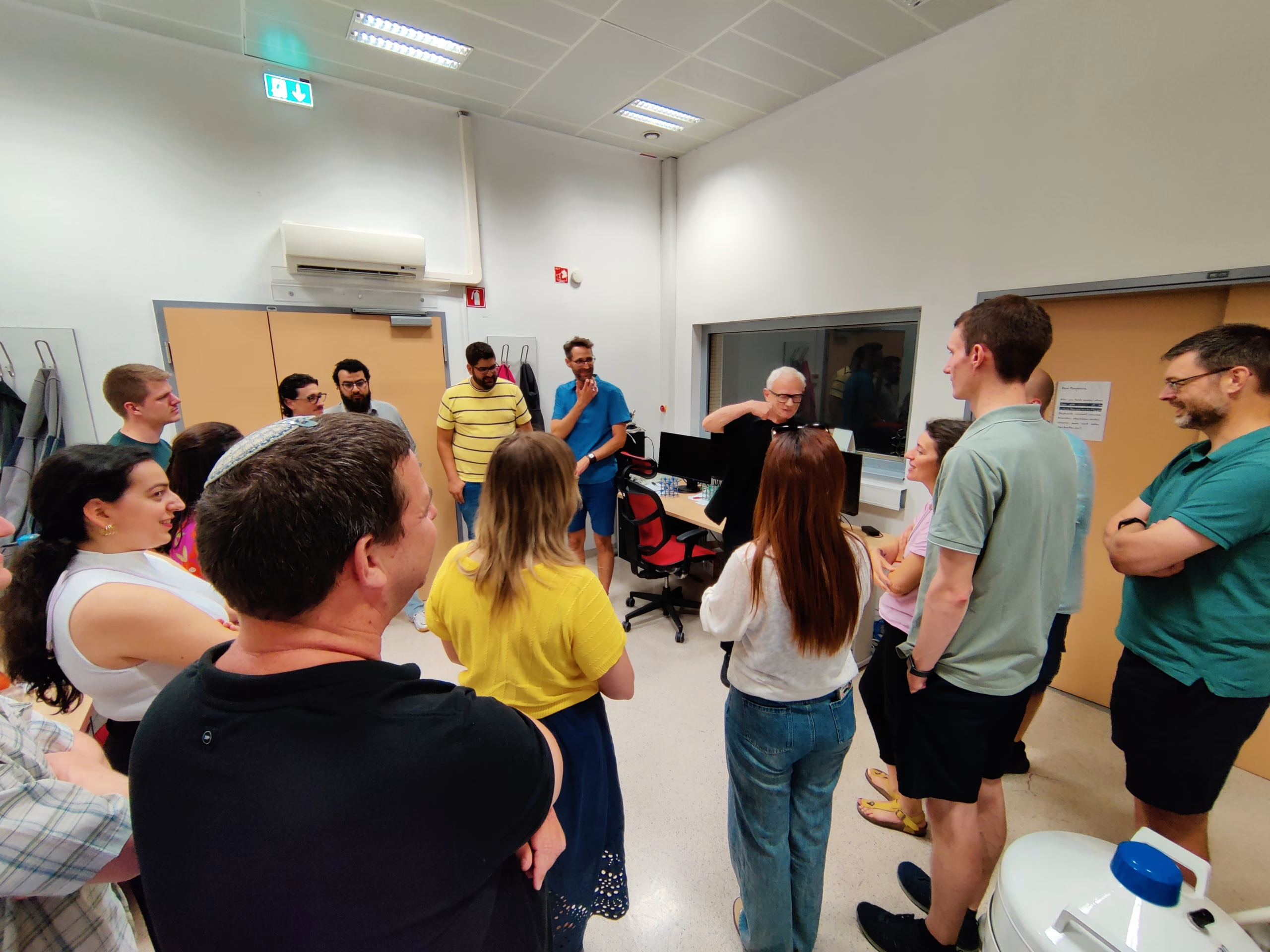
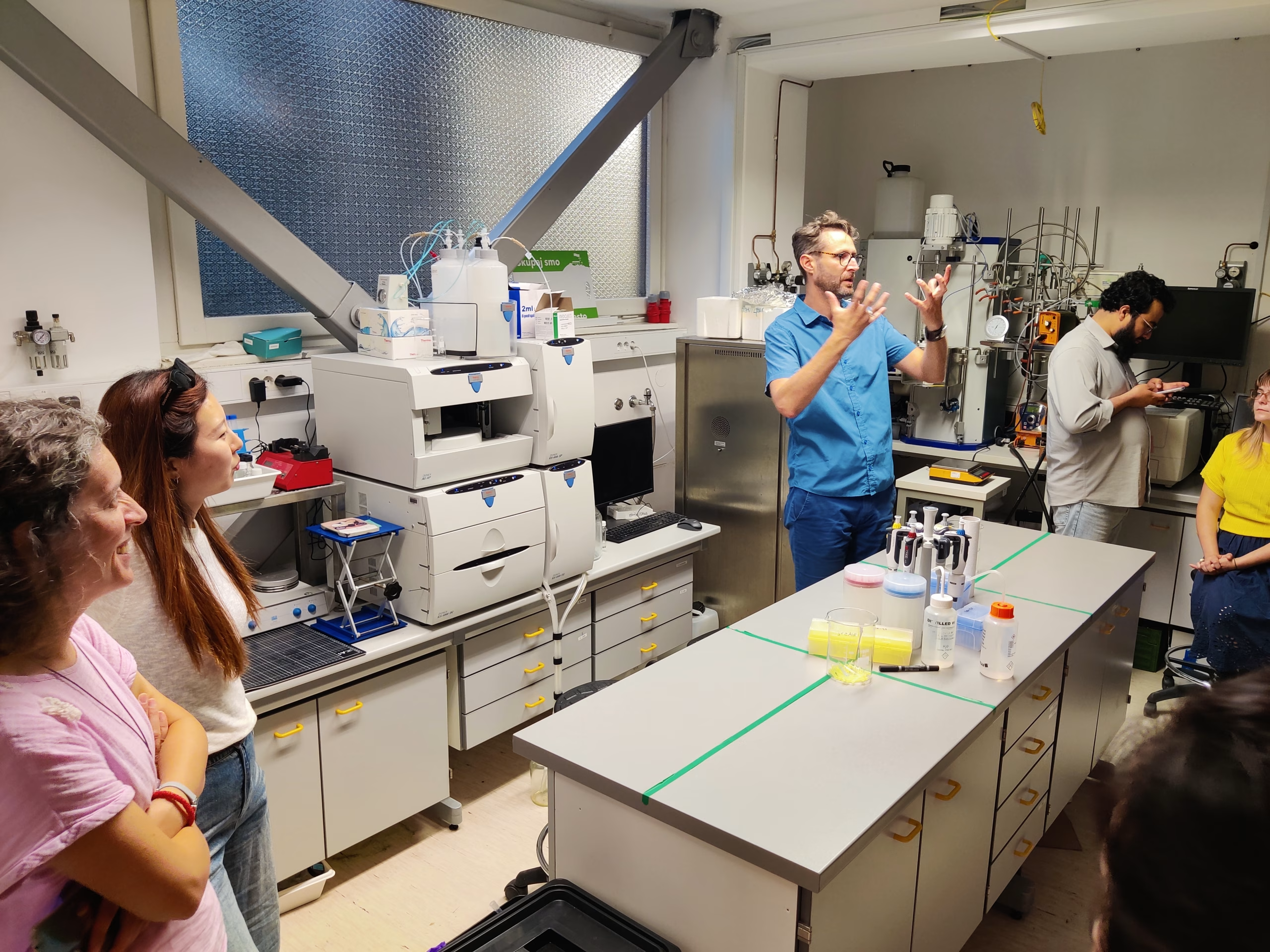
Participants were given a laboratory tour through the Department of Catalysis and Chemical Reaction Engineering of the National Institute of Chemistry. Ondrej Panak and his colleagues guided the project partners through some of the research groups within the department. Its core activities focus on chemical and process engineering, including reactor and unit operation design and construction, as well as multi-scale process modelling. Key research areas include carbon dioxide and natural gas conversion, hydrogen and fuel cell technologies, biomass valorisation to bio-based products, and (bio)pharmaceutical processes. The visit also included the microscopy center at NIC, providing insight into advanced characterisation and analytical capabilities.

Special thank you goes to the National Institute of Chemistry for hosting the meeting and for the excellent organisation, which also allowed participants to experience Slovenian culture and hospitality. Also big thank you also to our project coordinator, Milica Velimirović, for her continued leadership and guidance throughout the project.

Some impressions below.

Meeting inpressions:

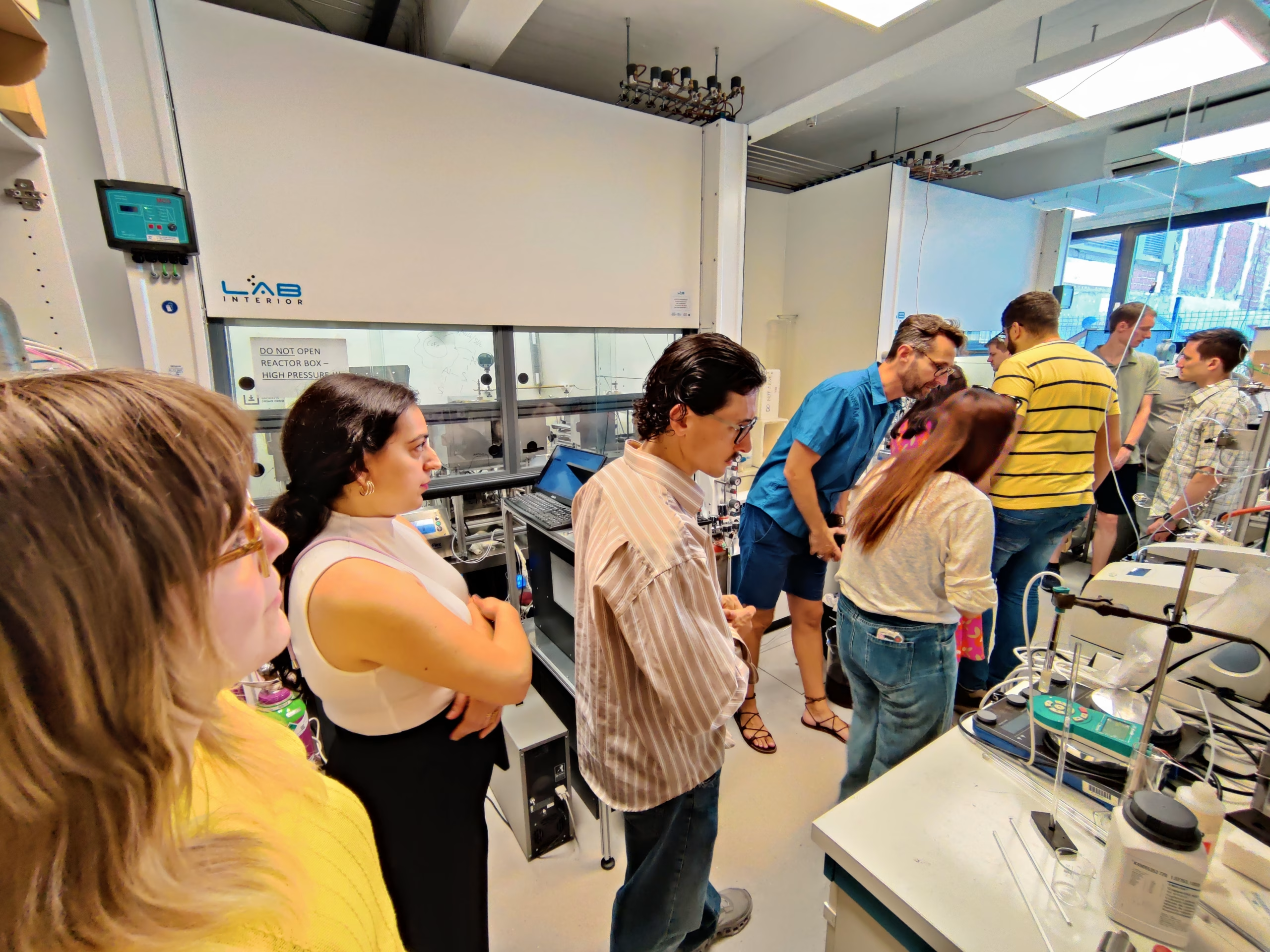
Lab visit:

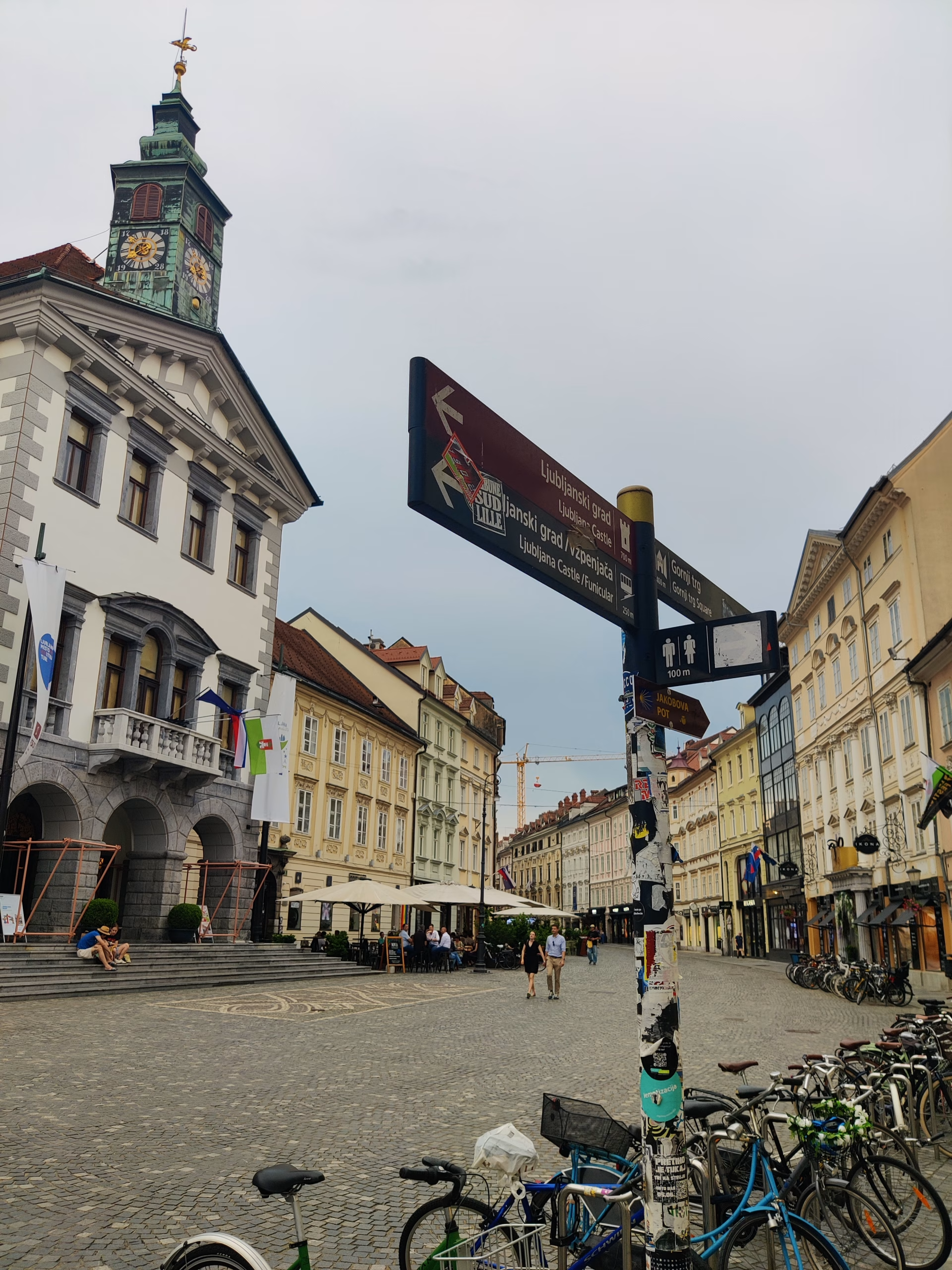
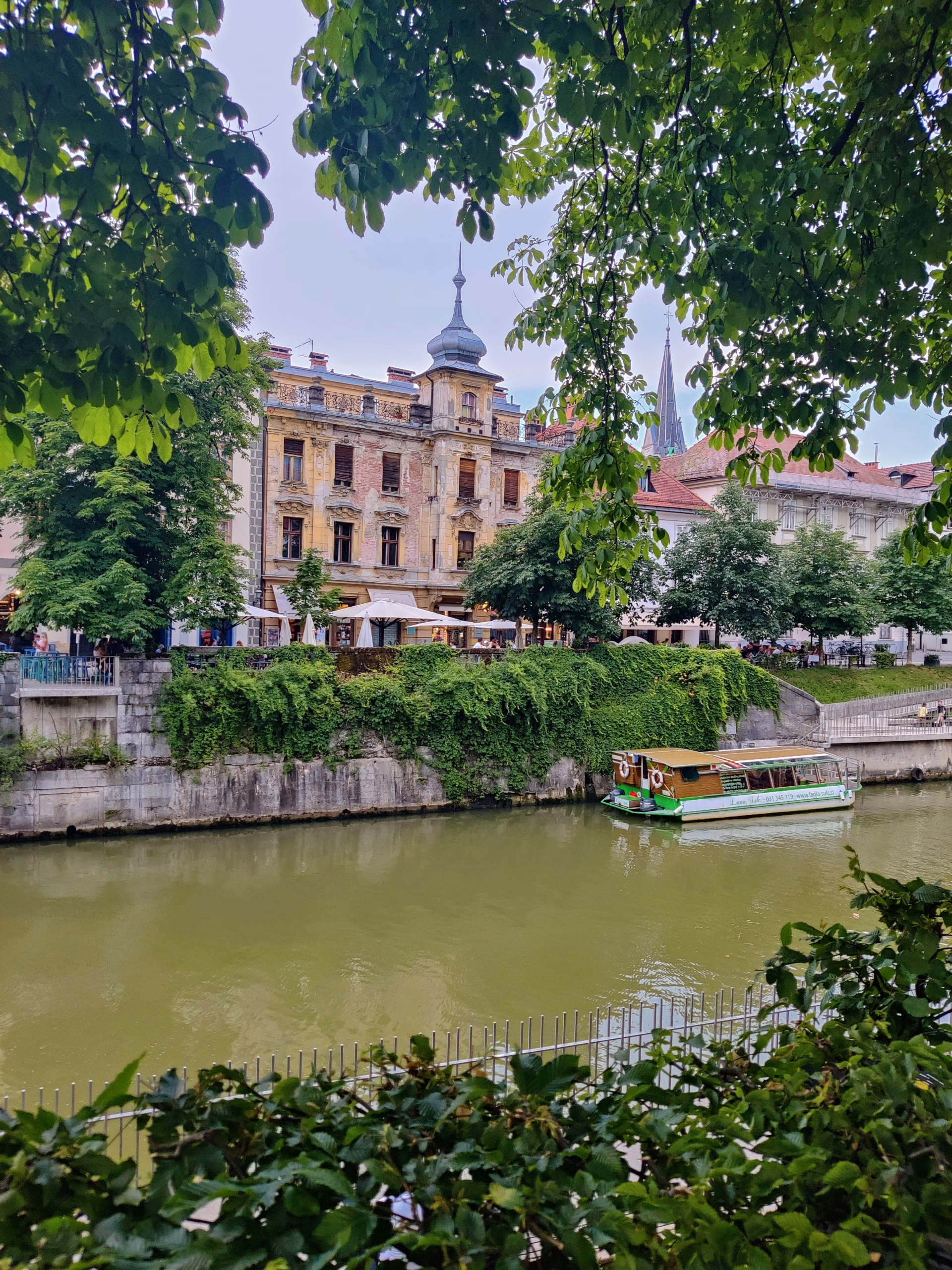
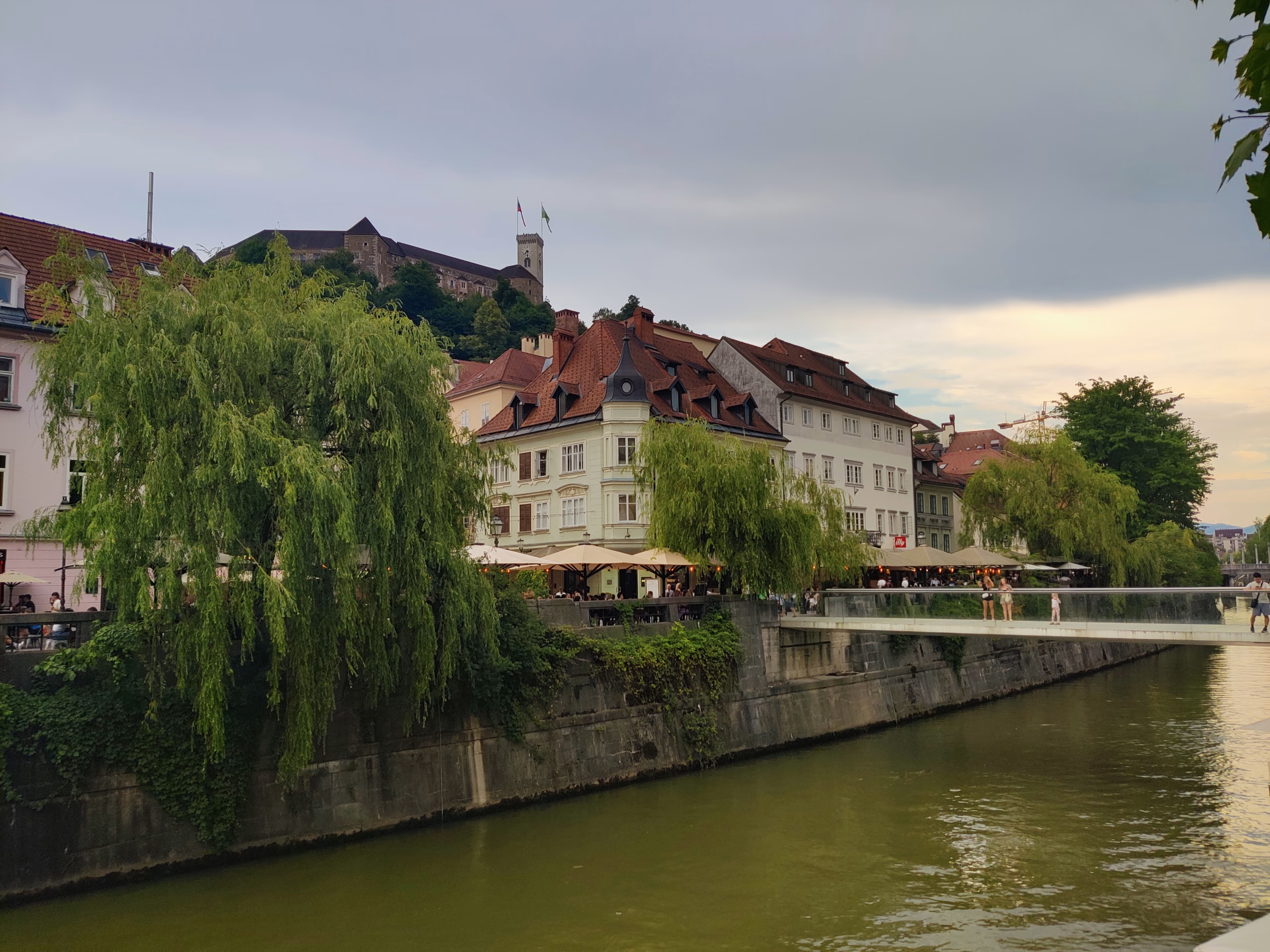
Ljubljana:

Culinarium:

Read More
SSbD4CheM_LIST_ERTO-Innovation-Awards2026_magSIMS

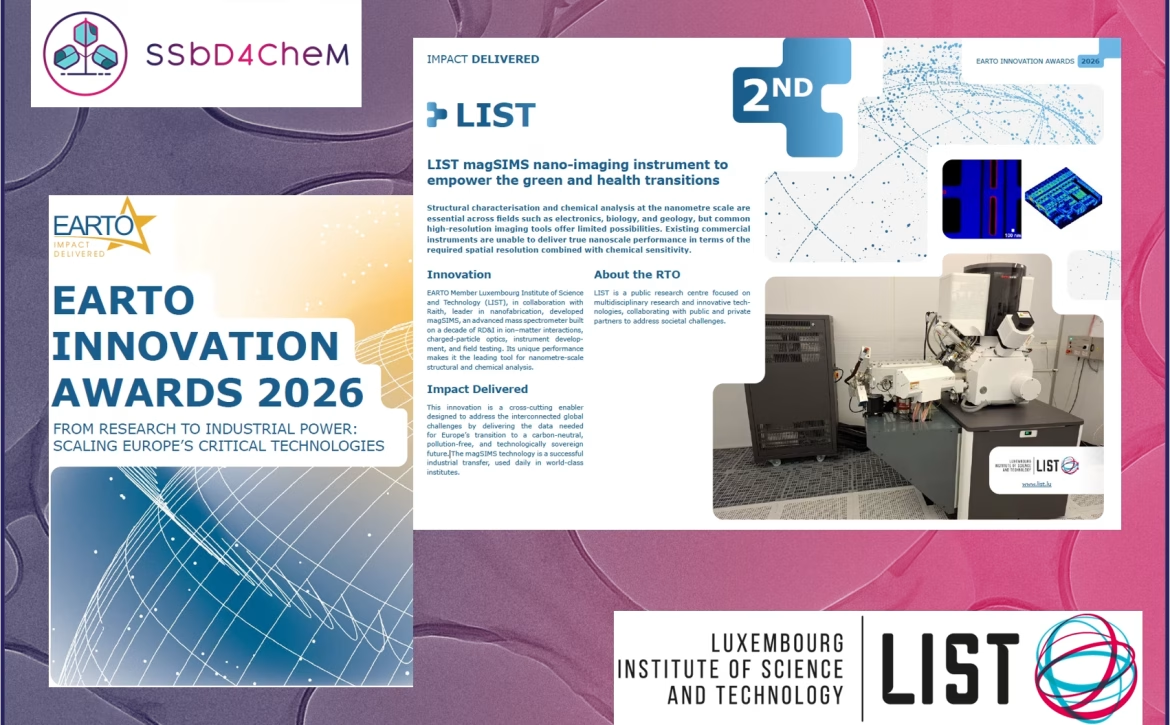
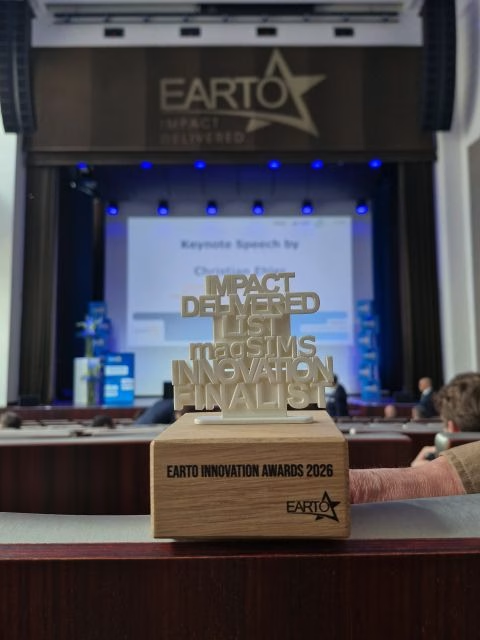
LIST awarded 2nd prize at the EARTO Innovation Awards 2026 for magSIMS nano-imaging breakthrough

We are pleased to congratulate our colleagues at the Luxembourg Institute of Science and Technology (LIST) for receiving the 2nd prize in the EARTO Innovation Awards 2026, in the category “Impact Delivered”, awarded during the ceremony on 10 June, for their magSIMS nano-imaging instrument.

The magSIMS, developed by LIST in collaboration with Raith, is an advanced mass spectrometer which enables structural and chemical analysis at the nanoscale. It combines exceptional spatial resolution with high chemical sensitivity, opening new possibilities across fields such as electronics, materials science, biology, and geology.

Within the SSbD4CheM project, our colleague Antje Biesemeier and her team at LIST are actively using the magSIMS to support key research activities. The instrument is applied to:

  • investigate nanotoxicological endpoints in the cosmetics use case
  • characterise physicochemical properties of innovative textile coatings developed within the project

This work not only advances scientific understanding within SSbD4CheM, but also contributes to the continued development and refinement of the magSIMS technology itself, demonstrating a strong synergy between methodological innovation and application-driven research.

A warm congratulations to LIST for this outstanding recognition and their continued contribution to addressing global challenges and supporting Europe’s transition towards a carbon-neutral, pollution-free, and technologically sovereign future. 

You can find here more information about the ceremony and the other finalists. 

SSbD4CheM_LIST_EARTOawards2026
Foto credits @ LIST

Read More
SSbD4CheM_InternalTrainingExpAssessment

Internal Training on Exposure Assessment (Oct. 2025 – April 2026)

The SSbD4CheM project continues to build internal capacity across its consortium to ensure a shared level of understanding across disciplines.

A dedicated training programme on human and environmental exposure assessments was delivered as a series of online sessions between October 2025 and April 2026 (25.10.2025, 01.12.2025, 23.02.2026, and 28.04.2026). The training focused on equipping consortium members with foundational and applied knowledge essential for assessing chemical safety within the Safe-and-Sustainable-by-Design (SSbD) framework.

The trainings were provided by experts from VITO (Wouter Gebbink and Yentl Pareja Rodriguez) and Hochschule Fresenius (Lars Eschlbeck and Stephan Wagener).

The sessions introduced participants to the basics of human and environmental exposure assessments, a cornerstone of understanding chemical risks in real-world contexts. In addition to foundational concepts, the training explored sector-specific case studies, with a particular focus on automotive applications. The trainings covered the gathering of the input that is needed to perform an exposure assessment (e.g. physico-chemcial properties, environmental fate properties), developing exposure scenarios (including operational conditions for worker exposure and emission scenarios for environmental exposure), and finally comparing the exposure to (eco)toxicological threshold values to assess potential risk. These examples helped participants connect theoretical approaches with realistic industrial scenarios, demonstrating how exposure assessment supports safer chemical design and use throughout product life cycles. The exposure/risk assessment approach as shown for the automotive case study will be applied to the cosmetic and textile case studies within the project.

Read More
SSbD4CheM_SETAC2026_VITO_Xiaoyu_Handy (2)

SSbD4CheM @ SETAC 2026 (17-21.05.2026, Maastricht)

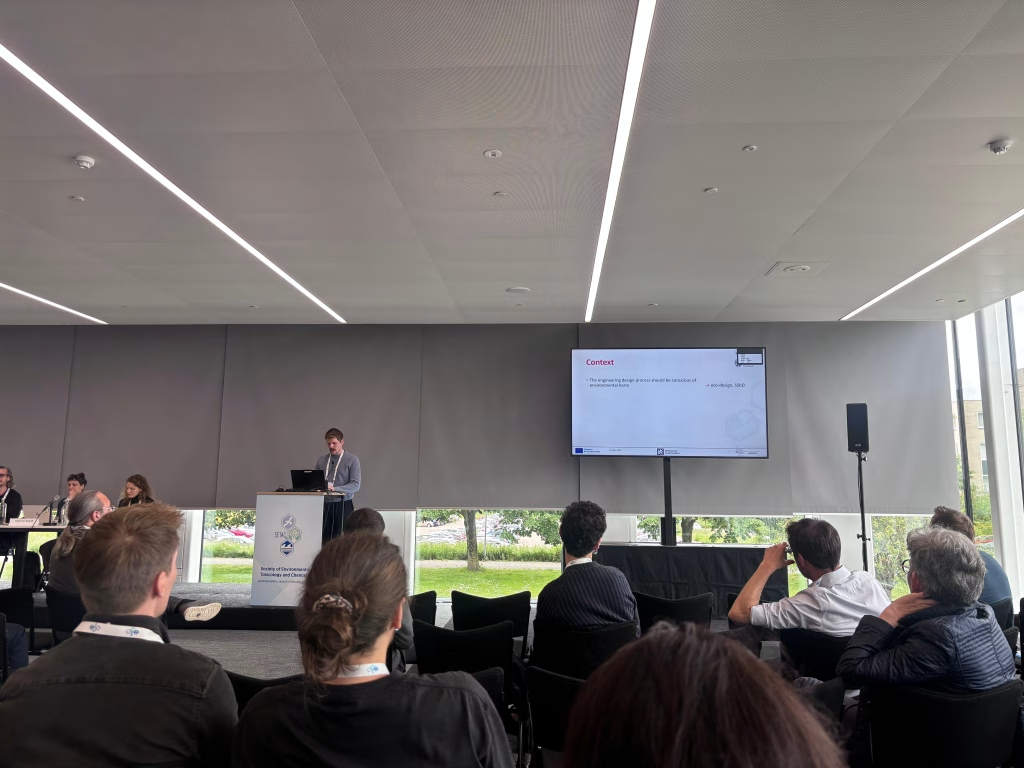
The SETAC Europe 36th Annual Meeting took place from 17–21 May 2026 in Maastricht, the Netherlands, bringing together around 2,500 participants from academia, industry, governmental institutions, and regulatory bodies interested in the programme, which included keynote lectures, oral and poster presentations, workshops, and networking events. This year, the event’s theme was ‘Embrace the outlier: in science, regulations, and networks’, bringing together diverse perspectives to advance environmental sciences and their adoption in policy making, and serving as a major platform for discussing the latest scientific and regulatory developments in environmental toxicology, environmental chemistry, sustainability, life cycle assessment (LCA), risk assessment, Safe and Sustainable by Design (SSbD), as well as including industrial ecology, material science, pharmaceutical sciences, governance studies, agricultural studies, etc.

SSbD4CheM partners from VITO (Xiaoyu Zhang and Wouter Gebbink), Leiden University (Thomas Arblaster, Nils Thonemann, and Jeroen Guinée) and BNN (Katharina Lang-Hogrefe) actively contributed to the conference by presenting research related to PFAS replacement strategies, the safe implementation of sustainable materials in industrial applications, as well as LCA in the automotive case study, and best practices in scientific communication.

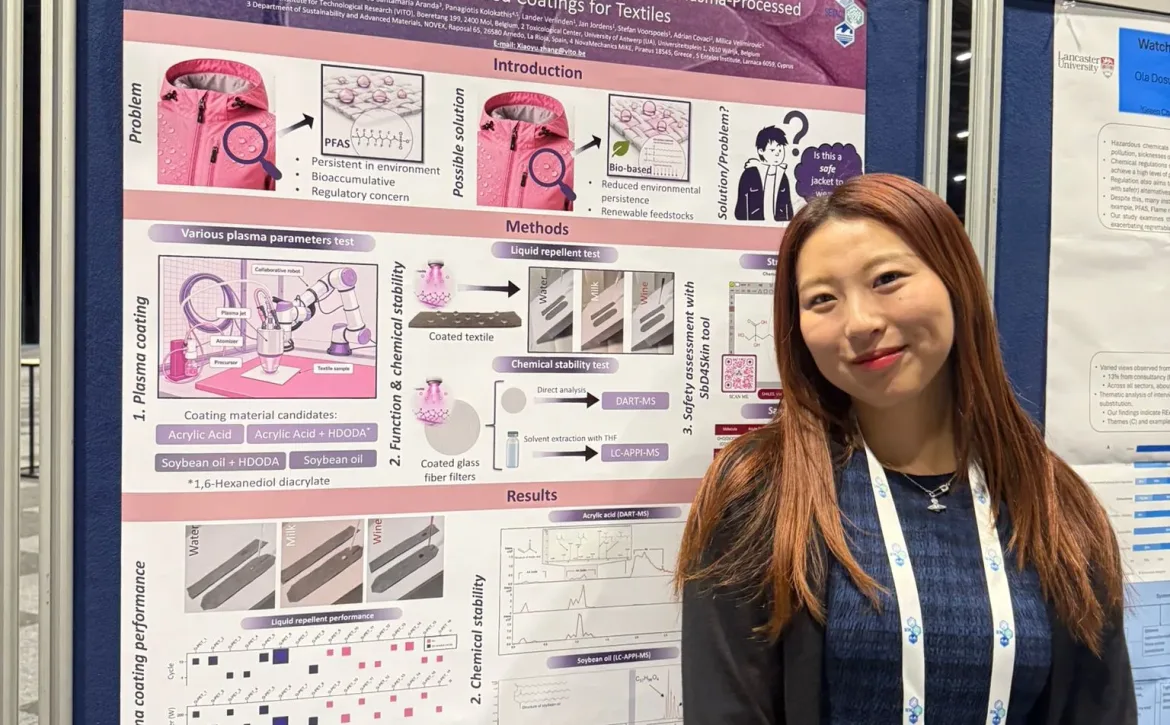
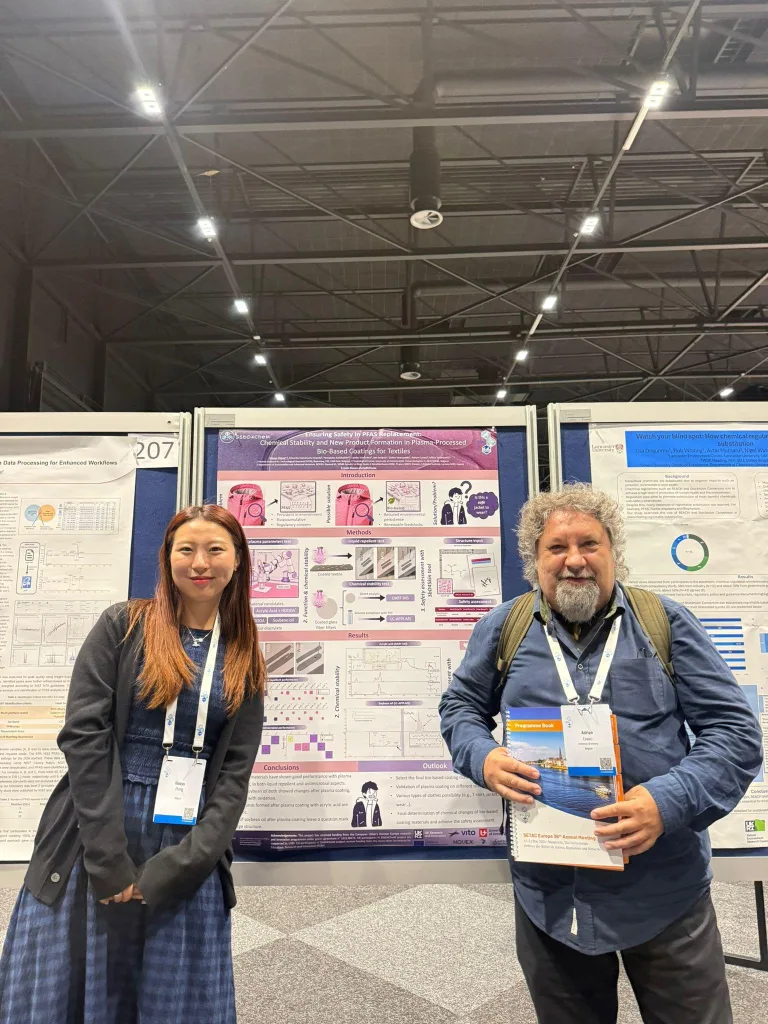
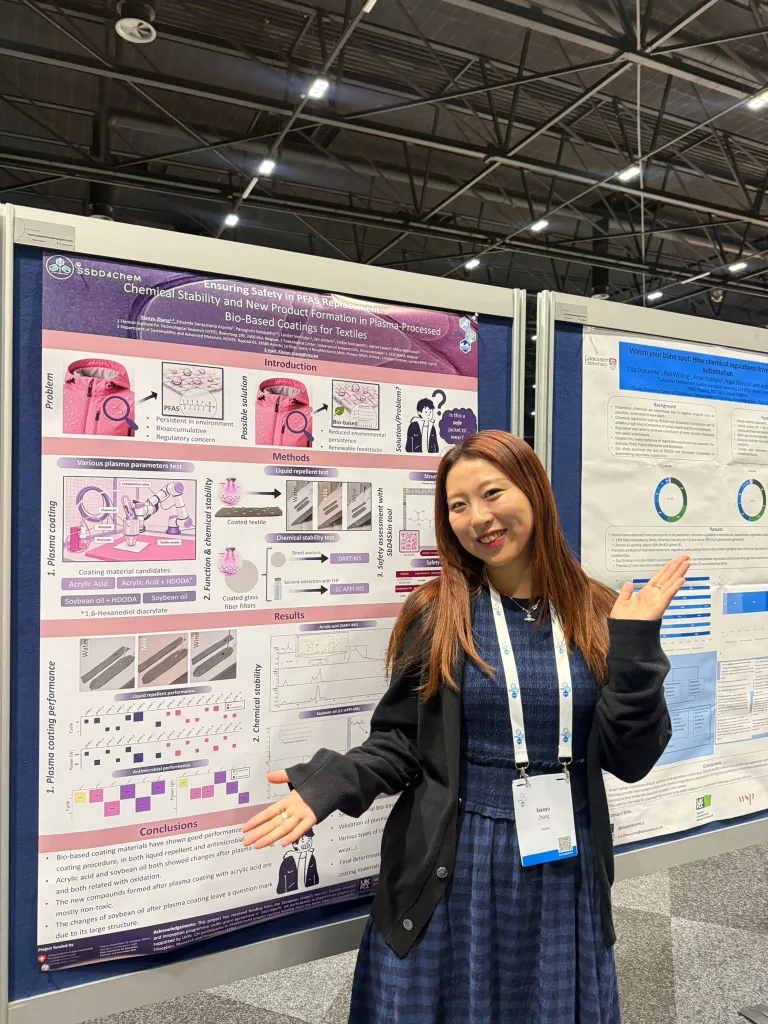
Xiaoyu Zhang (VITO) presented a poster entitled “Ensuring Safety in PFAS Replacement: Chemical Stability and New Product Formation in Plasma-Processed Bio-Based Coatings for Textiles”, on 19th May. The research focused on evaluating bio-based alternatives to PFAS-based textile coatings and assessing their chemical stability and safety following plasma processing. The study investigated acrylic acid and soybean oil-based coatings as potential PFAS-free solutions for textile applications. Using advanced analytical methods, including DART-MS and LC-APPI-MS, the work evaluated liquid repellency, antimicrobial performance, and the formation of new compounds after plasma treatment. The results demonstrated that bio-based coatings can offer promising functional performance while potentially reducing environmental persistence compared to conventional PFAS-containing materials. The work also included a preliminary safety assessment using the SbD4Skin tool, supporting the development of safer and more sustainable textile materials.

Wouter Gebbink (VITO) contributed with a presentation entitled “Occupational and Consumer Exposure to VOCs during the Production and Use Phase of Renewable Wood Plastic Composites for Car Interior Trims”, presented during the session Innovative Strategies in Implementing Safe and Sustainable by Design (SSbD) Approaches, on 21st May. The study evaluated worker and consumer exposure to volatile organic compounds (VOCs) during the production and use of renewable wood plastic composites for automotive interior panels. Key conclusions included: (i) Incorporating wood-based fillers in car interior panels can eliminate or reduce risks for workers during production and for consumers exposed to TVOC and FOG emissions inside vehicles. (ii) Weathered materials showed significantly lower TVOC/FOG emissions compared to pristine materials, resulting in lower in-car air concentrations. (iii) Although all estimated exposure levels remained below safe thresholds, children under 11 years of age experienced equal or higher exposure levels compared to adults. DOI: 10.5281/zenodo.20392915.

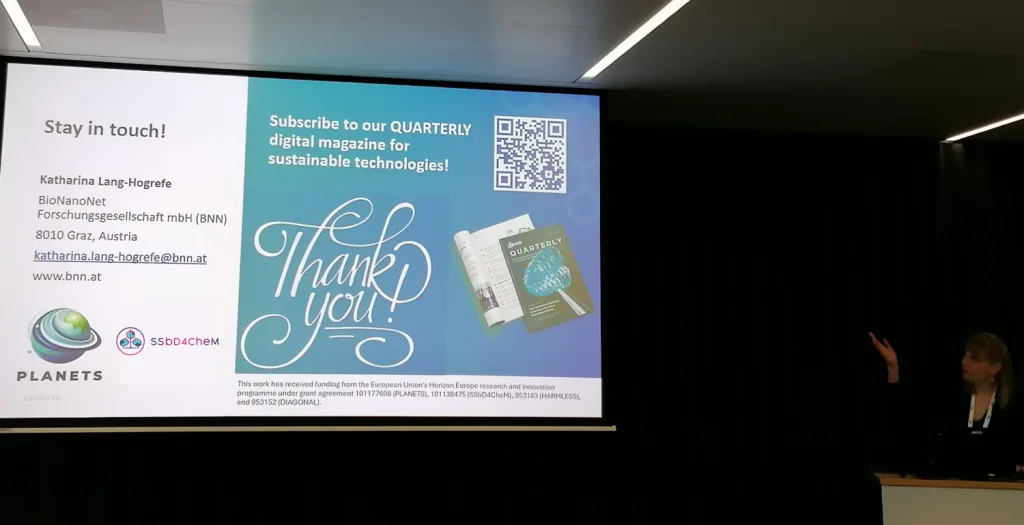
Katharina Lang-Hogrefe (BNN) gave an oral presentation on scientific communication, entitled “Clear, Concise, and Complete: Finding the Sweet Spot for Detail and Simplification in Science Communication“, on 18th May in the Session “6.10 – Translating Complexity – The Role Science Communication Plays in Generating Lasting Societal Impact“. DOI: 10.5281/zenodo.20345940
 
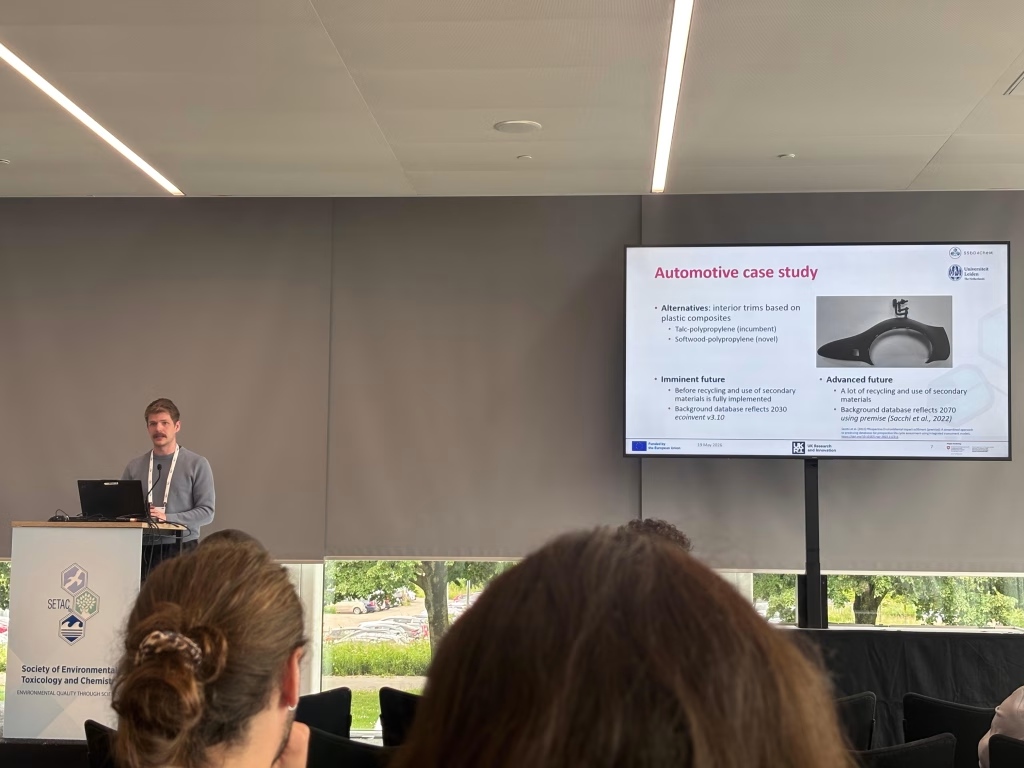
Thomas Arblaster (Leiden University) gave an oral presentation on 19th May, entitled “Is Time-Explicit Life-Cycle Assessment Useful? A Vehicle Eco-design Case Study“, in session 5.02 ‘Advancing Methods for Prospective Life Cycle Assessment to Support Radical Approaches to Sustainable Research and Innovation’, which was part of track 5 ‘Life Cycle Assessment and Foot-Printing’. In his presentation, Thomas outlined how the consideration of time affects the assessment of a system in the context of eco-design – such as occurs in SSbD. This work was conducted as part of WP6 in SSbD4CheM and forms an important contribution to the development of guidance for a robust ex-ante assessment to inform environmental sustainability. In the presentation, four temporal perspectives were explained, which differ in how they consider the system’s relationship with time. The consideration of imagined futures (prospective LCA) which may change over time (time-explicit LCA) is a rapidly expanding niche in the LCA community. This study critically addresses some of the recent advancements and proposes new classifications with which to describe how time is considered in an LCA study. DOI: 10.5281/zenodo.20395341.
 

The participation in SETAC Europe 2026 provided an important opportunity for SSbD4CheM partners to disseminate research outcomes, engage with experts in environmental safety, analytical chemistry, operationalisation of ex-ante LCA for (environmental) sustainability assessment in SSbD, and strengthen collaboration within the sustainability and toxicology communities.

The posters and oral presentations generated valuable scientific discussions around SSbD implementation, PFAS alternatives, environmental exposure assessment, sustainable materials development, LCA, and scientific communication. The event also contributed to increasing the visibility of the project and fostering future networking and collaboration opportunities.
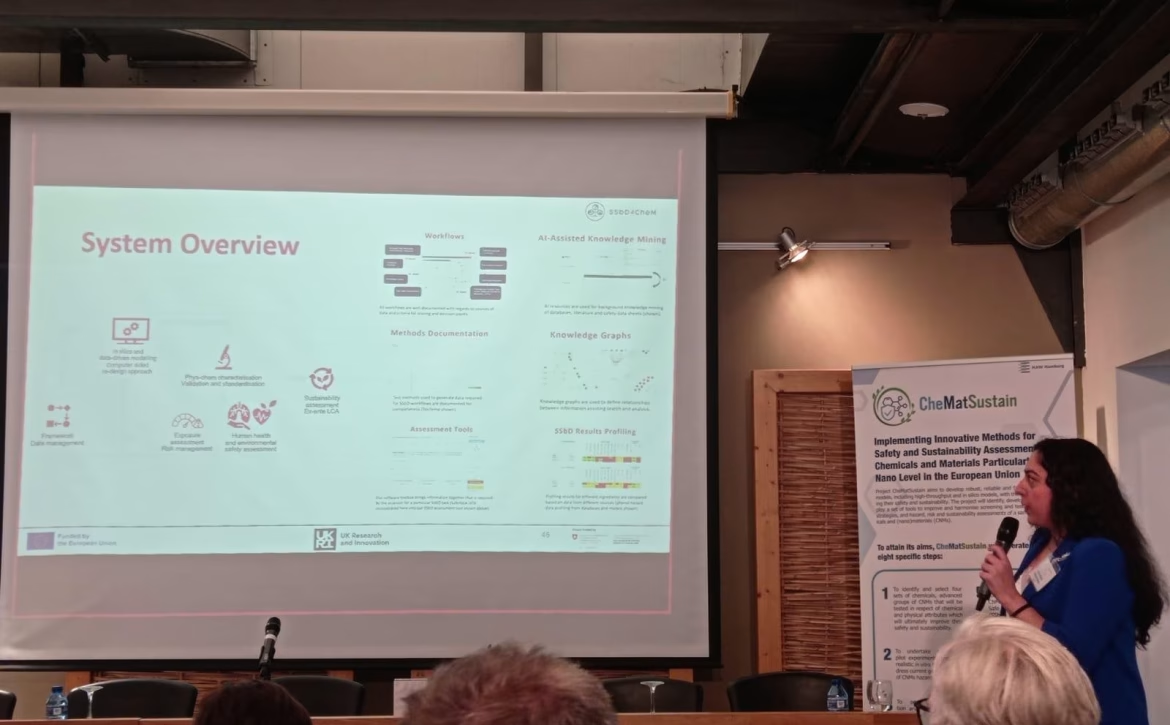
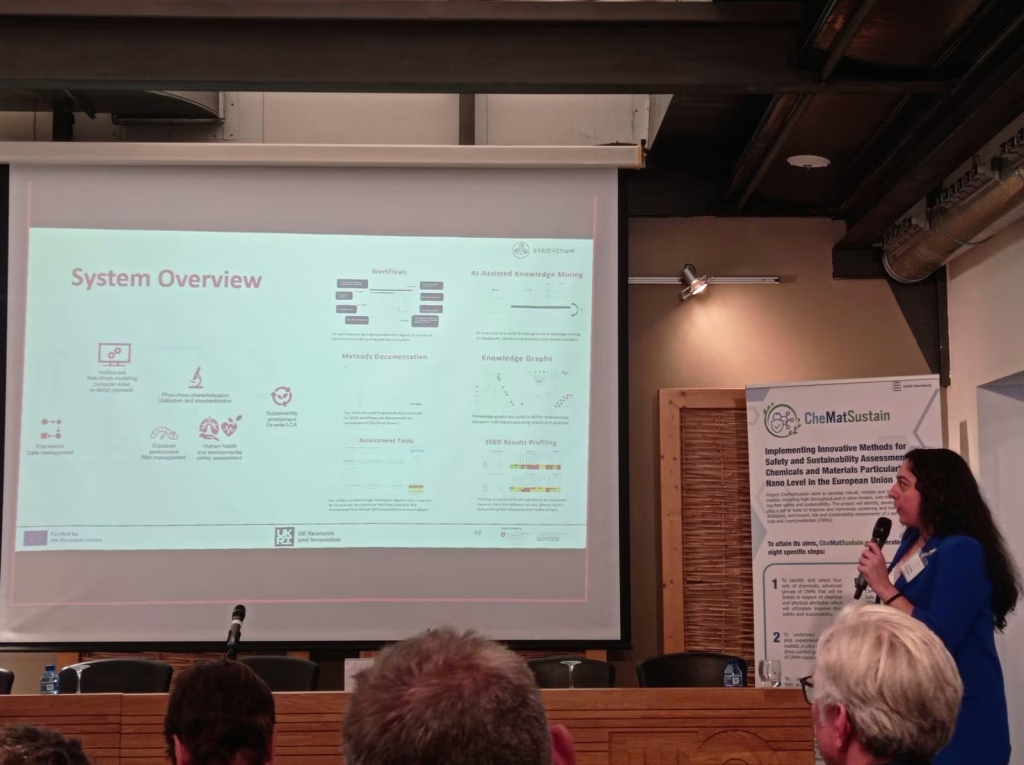
Read More
C4R_03_GroupPic1

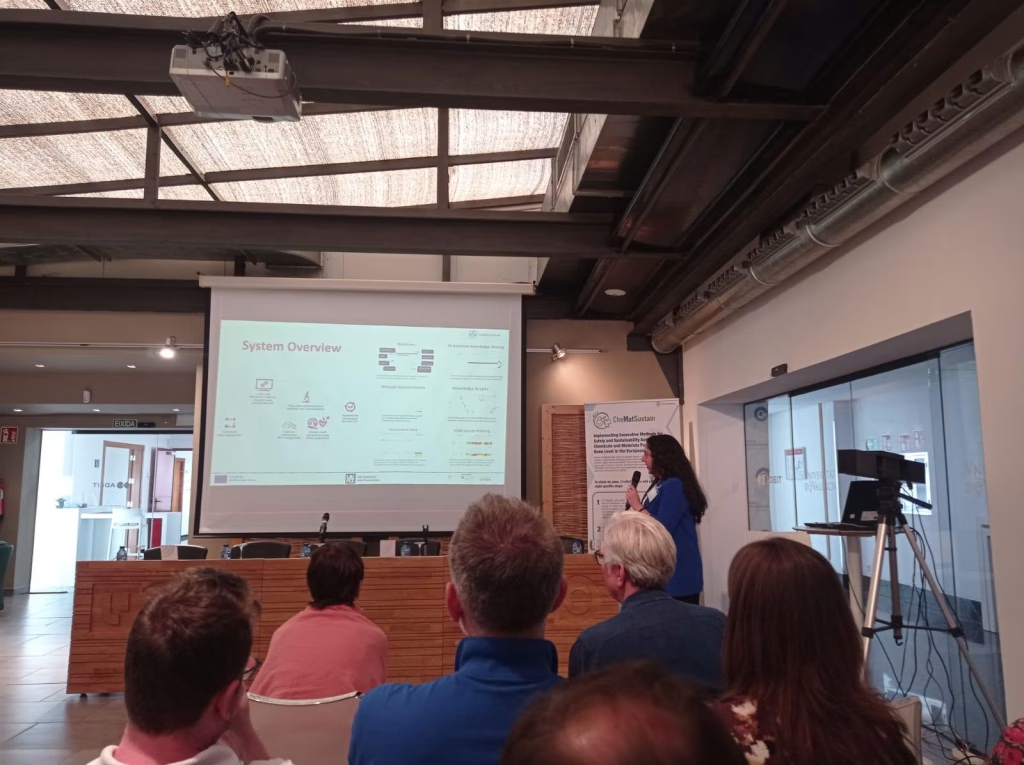
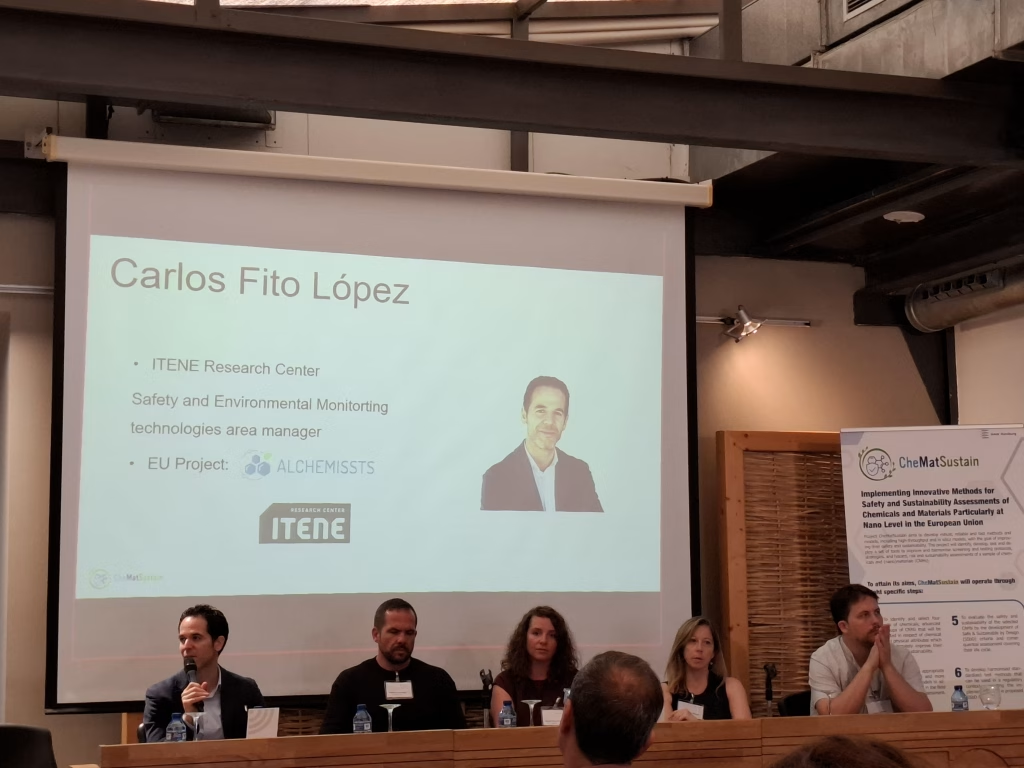
SSbD4CheM@ 3rd Collab4Resilience (C4R) meeting

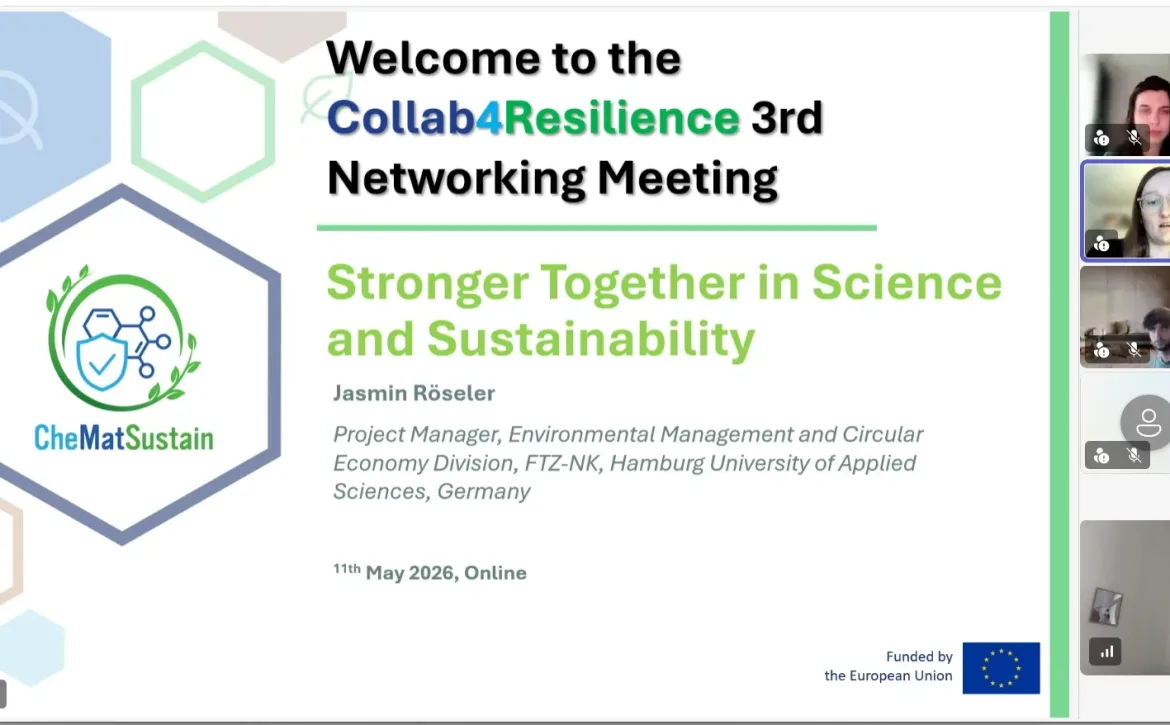
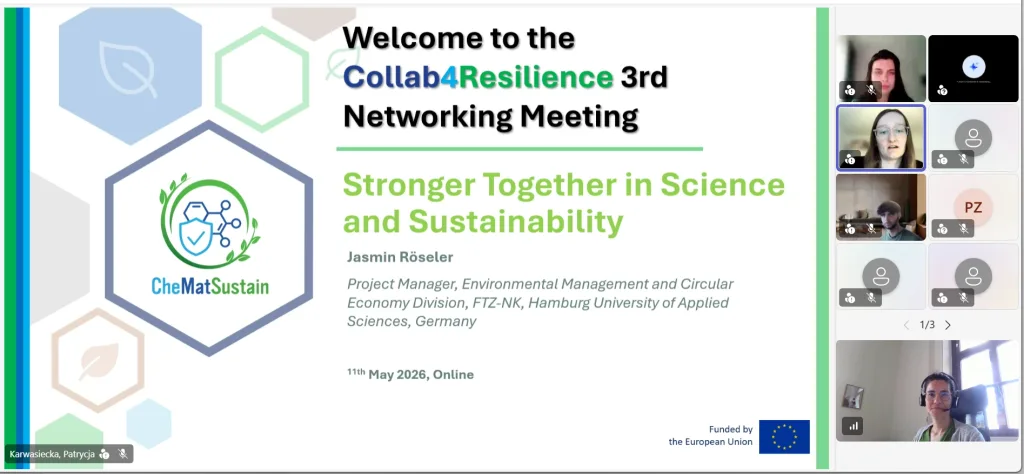
On 11th May 2026, SSbD4CheM partners (Beatriz Alfaro, BNN) part in the third networking workshop of the Collab4Resilience (C4R) initiative, organised by the CheMatSustain communication team. The initiative brings together projects working on safe and sustainable chemicals and nanomaterials, with the goal of strengthening collaboration and amplifying the impact of communication and dissemination activities across the community.

The workshop gathered 25 participants, including both long-standing members and new contributors, creating a dynamic and engaging environment for exchange. SSbD4CheM colleagues actively participated in the discussions, contributing to reflections on the key highlights and achievements since the previous meeting. The session highlighted the significant progress made across the network, as well as several important milestones reached by participating projects.

A central focus of the workshop was on identifying new opportunities for collaboration. Participants explored upcoming joint actions, including events, publications, and coordinated communication activities designed to maximise outreach and visibility. These exchanges provided valuable insights into how projects like SSbD4CheM can further align efforts with other initiatives in the field and contribute to a stronger, more connected research and innovation landscape.

SSbD4CheM colleagues look forward to building on these discussions and contributing to future joint activities that support the transition towards safe and sustainable chemicals and materials.

A big thank you to the CheMatSustain team for organising this productive exchange, and to all participants for their valuable contributions.

The agenda of the meeting is available here.

Read More
Screenshot 2026-05-13 at 12.17.21 PM

SSbD4CheM and BIO-SUSHY collaboration on Sustainable Packaging Solutions

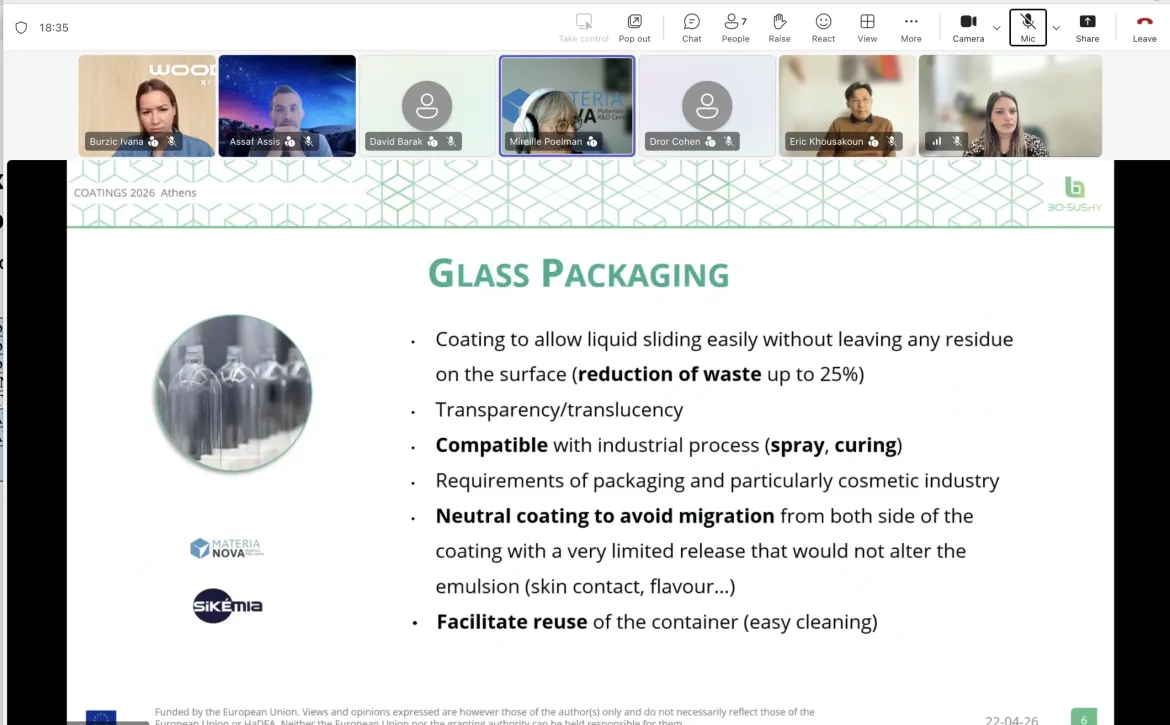
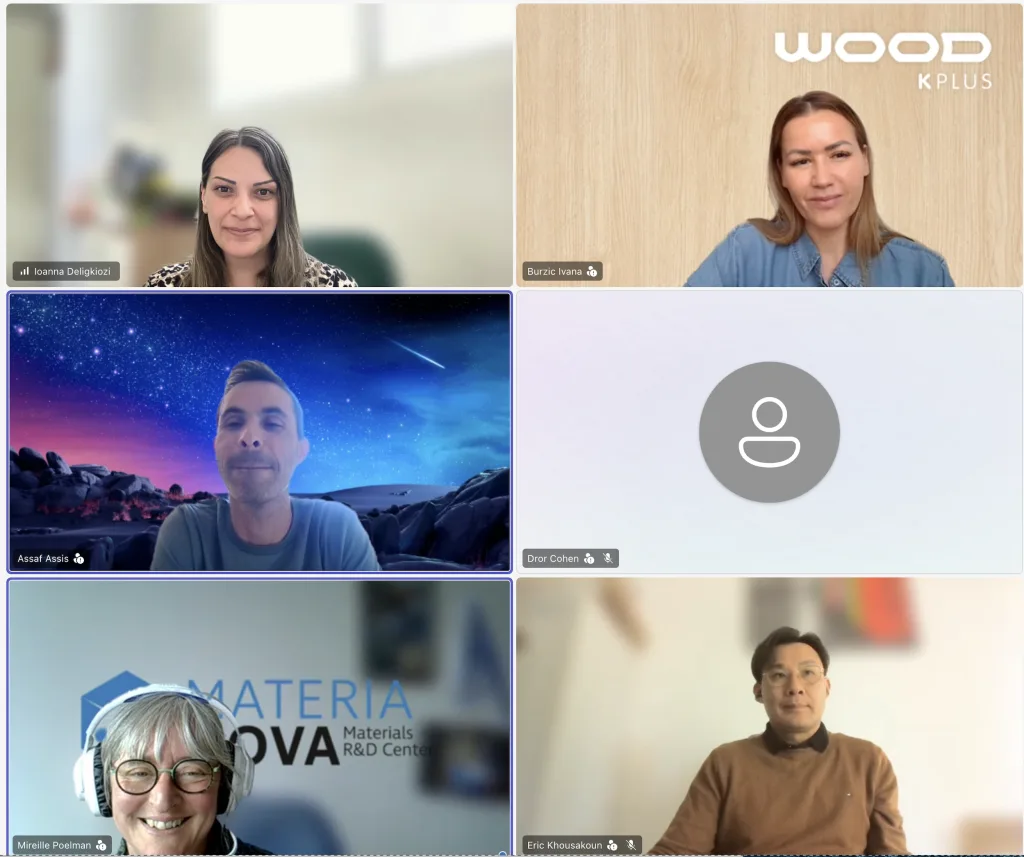
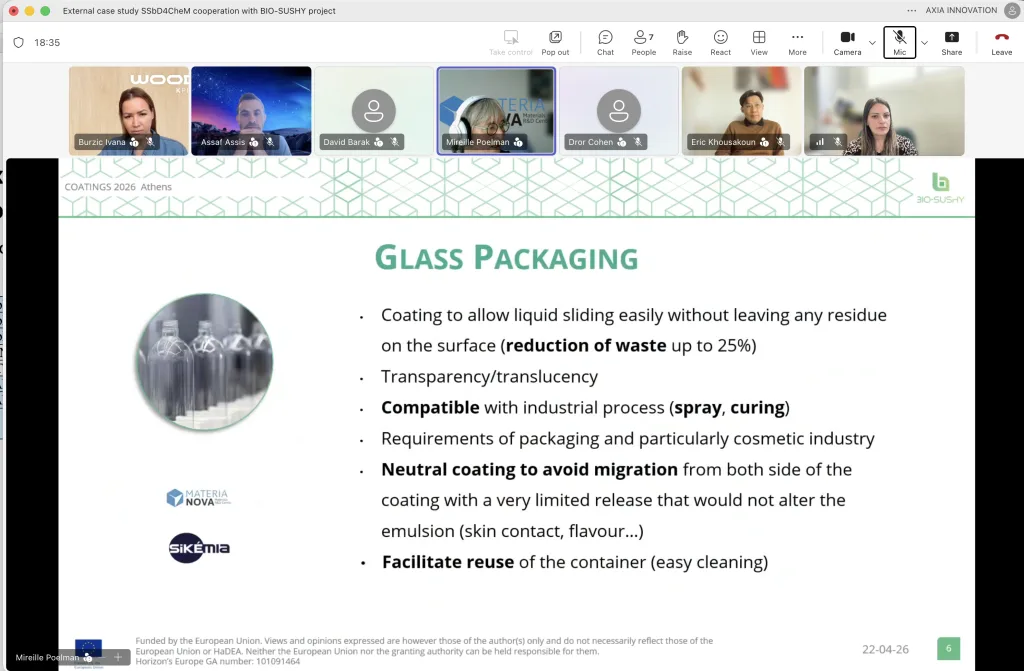
The EU-funded projects SSbD4CheM and BIO‑SUSHY are advancing their joint efforts to develop innovative, safe, and sustainable solutions for cosmetic packaging. In BIO-SUSHY it is all about PFAS-free coatings development for paper-based packaging, textile and glass packaging applications; in SSbD4CheM, among others, it is about the development of new sustainable fillers like nanocellulose and its implementation in different cosmetic products. As part of this ongoing collaboration, the partners have outlined a series of concrete next steps aimed at validating environmentally friendly materials like PFAS-free coatings for cosmetic glass packaging with sliding performances (easy clean effect) and novel cosmetic formulations, under real-use conditions.

Partner Materia Nova, from BIO-SUSHY, will select a specific design type of glass packaging coated by PFAS-free coatings (sol-gel applied by spray) . The selected coated glass containers will be shared with the AHAVA team, from SSbD4CheM project, for evaluation of cosmetic cream product stability and feedback. Based on AHAVA’s input, 16 cosmetic glass packages will be coated with BIO-SUSHY’s sol-gel coatings for stability tests covered by AHAVA team.

Following the coating process, the packaging will be transferred to AHAVA, where it will undergo practical application and testing. AHAVA will fill the coated containers with the newly developed cosmetics developed within the SSbD4CheM project (nanocellulose cream and/or lotion) for testing in laboratory conditions. This step is crucial to assess how the innovative coatings perform in terms of product durability, sustainability, and safety over time.

In the final phase of the BIO SUSHY project, at least one coated glass packaging will be delivered to AHAVA. This packaging will be used to test the new formulations of the cosmetic products incorporating nanocellulose as functional filler.

This external case study highlights the strong synergy and collaboration efforts between both projects, bridging material innovation, industrial application, and sustainability goals. By combining novel coating technologies with bio-based cosmetic formulations, the projects are taking significant steps toward Safe-and-Sustainable-by-Design (SSbD) packaging systems for the cosmetics industry. The outcomes of this cooperation are expected to provide valuable insights into the scalability and real-world performance of eco-friendly materials, supporting the transition to more sustainable product systems across Europe.

Stay tuned for the results!

Read More
GroupPic

SSbD4CheM at key EU events on SSbD in Brussels (19-20.03.2026)

In March 2026, the SSbD4CheM project actively contributed to two major European events dedicated to advancing the Safe and Sustainable by Design (SSbD) framework, both held in Brussels.

The project participated in the 6th EC SSbD Stakeholder Event: ‘Safe and Sustainable by Design: Accelerating the Industrial Transition’ on 19 March 2026, followed by the SSbD Horizon Europe Projects Networking Event on 20 March 2026. Together, these events brought around 60 participants from a broad range of stakeholder groups, including EU institutions, industry, innovators, investors, and representatives from research and policy communities.
The discussions highlighted the critical role of collaboration between research projects, industry, and policymakers in maximising the impact of SSbD approaches. Taking place shortly after the adoption of the revised SSbD framework, the events highlighted the European Union’s strong commitment to fostering the development of chemicals and materials that are safe and sustainable by design, addressing potential risks early in the innovation process.
SSbD4CheM was represented by Milica Velimirovic (VITO) , and Barry Hardy (EwC). Andreas Falk from BNN also participated in his role as part of the NSC coordination team, and as partner of SSbD4CheM. During the networking event, Milica delivered an oral presentation showcasing the SSbD4CheM project. She introduced the project’s tools and methodologies, demonstrating how integrated assessment approaches and toolboxes are being developed to support informed decision-making and lifecycle analysis. [DOI: 10.5281/zenodo.19913251]
The participation in both events provided valuable opportunities to strengthen connections with other Horizon Europe projects and key stakeholders. In particular, the networking event fostered discussions on future collaboration and contributed to building a stronger, more connected SSbD ecosystem across Europe.

SSbD4CheM remains committed to supporting the implementation of the SSbD framework and to contributing to a safer and more sustainable chemicals and materials landscape.

GroupPic
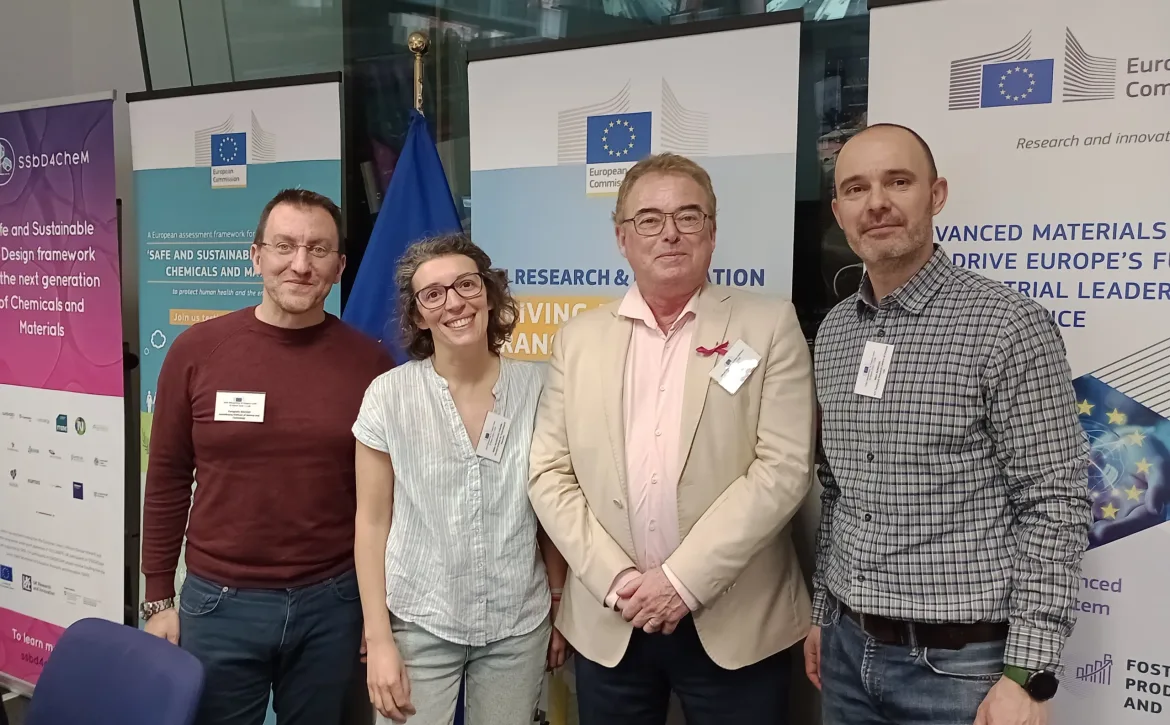
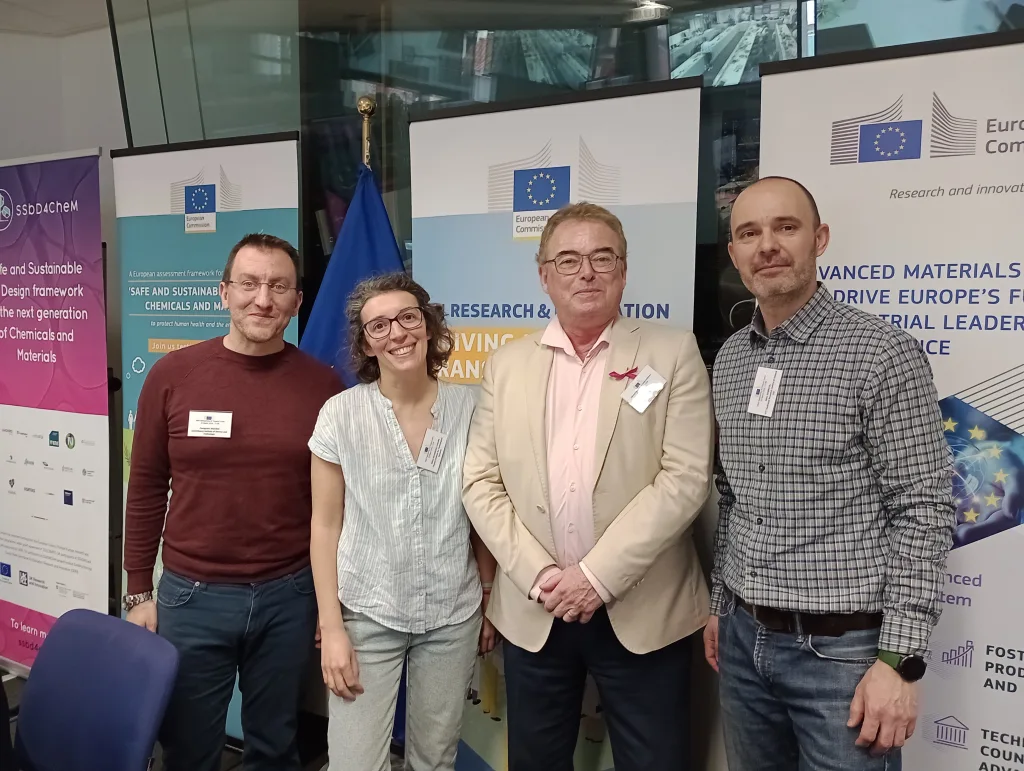
From left to right: Panos Isigonis, Milica Velimirovic, Barry Hardy, and Marc Borrega
AndreasFalk_BNN
Andreas Falk
PresentationMilicaVelimirovic
Presentation of Milica Velimirovic
PlenaryRoom
During the event
RollUp

Read More
TassosPapadiamantis_Entelos

WP Leaders interview series: Tassos Papadiamantis (Entelos Institute)

TassosPapadiamantis_Entelos

Tassos Papadiamantis is a senior scientist at the Entelos Institute (Cyprus). Within SSbD4CheM, he is leading the work package dealing with the computer aided (re)design approach.

Tell us a bit about yourself. What is your area of expertise?

Tassos Papadiamantis: My expertise is at the interface of nanomaterials safety, data and AI governance and management, and responsible predictive modelling. On the data side, I work on making nanosafety, materials, and chemicals data FAIR. On the modelling side, I develop responsible AI and machine-learning approaches to predict how materials behave, e.g., read-across models for ζ-potential and stability. I also work on developing ethical AI assessment frameworks applicable in materials and chemicals research. I bring this work into the regulatory space, mainly through projects with the European Union Observatory for Nanomaterials and EFSA, and publicly and commercially funded projects, supporting REACH and CLP compliance. This is also what I bring into SSbD4CheM and WP2, data-driven modelling, responsible AI, and FAIR data practices feeding directly into safe and sustainable design.

How does your specific work package “Computer aided (re)design approach” contribute to the project?

TP: WP2 provides the computer-aided (re)design layer of SSbD4CheM. Our role is to bring computational tools into the SSbD framework so that material selection and re-design decisions can be made early, before going to the lab. We combine physics-based methods and data-driven workflows that predict properties, behaviour, fate and transport of candidate materials. From these results we also identify the data gaps that need experimental work, which then guides what is actually measured in the project. On top of that, we develop a data-driven LCA estimation framework, so even for materials that do not yet have full inventory data we can give an estimation on their environmental impact. In practice, WP2 is the layer that turns SSbD from a principle into something computable and iterative.

What is the most exciting thing about the activities in your work package?

TP: For me the most interesting part is the loop we are building between models and experiments. The data-driven workflows we set up are not delivered once and frozen. They can be refined with new experimental data and the refined models can then feed the next design cycle. Combined with the LCA estimation step, this lets us look at safety, performance and lifecycle impact of a material that may not exist yet in the lab, which is something quite hard to do today. And we get to test this on three very different case studies, i.e., renewable composites for automotive, PFAS-free coatings for textiles, and cellulose nanofibers replacing plastic microbeads in cosmetics.

- Tassos Papadiamantis photo

- Tassos Papadiamantis

Senior Scientist at Entelos Institute

“In SSbD4CheM, we bring computational tools into safe and sustainable design, enabling early, data-driven decisions before materials reach the lab. By combining AI, predictive modelling and lifecycle estimation, we create an iterative loop between models and experiments, helping industry and regulators assess safety, performance and environmental impact even for materials that do not yet exist.”

From your point of view, who can benefit the most from the project?

TP: The most direct beneficiaries are the chemical and material producers and the downstream industries in automotive, textile and cosmetics. These are the stakeholders that carry the cost and the risk when a material turns out, later in development, to be unsafe, non-compliant, or with a poor environmental profile. With the WP2 tools they can take SSbD decisions earlier, with fewer experiments and with a clearer picture of the full lifecycle. Beyond industry, regulators and standardisation bodies also benefit, because the methods are validated following OECD principles and reported in formats they can directly use (for example QMRF for the predictive models). And in the end consumers benefit too, since products reaching the market will have been screened for safety and sustainability before scale-up, not after.

Read More
03_FRAUNHOFER_Yvonne-Kohl2

WP Leaders interview series: Yvonne Kohl (Fraunhofer IBMT)

Yvonne Kohl is a senior scientist at the Bioprocessing & Bioanalytics department of the Fraunhofer Institute for Biomedical Engineering IBMT (Germany). Within SSbD4CheM, she is leading the work package dealing with models for human health and environmental safety assessment.

Tell us a bit about yourself. What is your area of expertise?

Yvonne Kohl: My professional expertise is in toxicology, with a strong focus on in vitro safety assessment. Over the past years, my research focused on establishing human-relevant in vitro models, often referred to as New Approach Methods (NAMs), with the goal of enabling their regulatory use. As a Senior Scientist and Scientific Specialist for Toxicology at the Fraunhofer IBMT my main areas of work include human toxicology, hazard assessment of chemicals and nanomaterials, innovative preclinical in vitro models, biohybrid systems, biological barriers and organ-on-chip systems.

How does your specific work package “Innovative models for human health and environmental safety assessment” contribute to the project?

YK: WP4 is really the engine of the project when it comes to innovative safety testing. Our role is to develop and deliver the core model systems and data that are needed for a modern, reliable safety assessment of nanomaterials and chemicals. Concretely, we develop and refine advanced in vitro, ex vivo and zebrafish embryo models that reflect key human and environmental exposure routes, such as skin, lung, gut and the aquatic environment. We then optimise these methods into robust, efficient screening tools that are fully aligned with the 3R principles—replacement, reduction and refinement of animal testing. At the same time, we are building a comprehensive data library on hazardous properties to address critical knowledge gaps. To ensure that our methods are truly fit for purpose, we run inter-laboratory comparisons and pre-validation studies up to TRL 6, demonstrating reproducibility, applicability and robustness and moving the methods closer to practical application in regulation and industry. Through all of this, WP4 provides the practical tools and evidence base that enable safer-by-design decision-making and support the regulatory acceptance of alternative test methods..

What is the most exciting thing about the activities in your work package?

YK: What excites me most about our work package is that we’re not just developing isolated test methods, but building an integrated, human-relevant model system. This allows us to realistically mimic key exposure routes—such as skin, lung, and gut—and to capture low-dose, chronic effects of nanomaterials and chemicals. By combining advanced in vitro and alternative models with real-life exposure scenarios, and then validating them through inter-laboratory comparisons, we’re really closing the gap between exploratory research and regulatory or industrial application. This gives our work a very tangible impact: it can directly contribute to reducing animal testing in line with the 3R principles, support safe-by-design innovation, and provide practical tools that industry and regulators can actually implement in their decision-making.

- Yvonne Kohl photo

- Yvonne Kohl

Senior Scientist at Fraunhofer Institute for Biomedical Engineering (IBMT)

“We’re building integrated, human-relevant model systems that mimic key exposure routes like skin, lung and gut, rather than isolated test methods. By combining advanced in vitro approaches with real-life scenarios and validating them across laboratories, we close the gap to application—reducing animal testing and enabling practical, safe-by-design solutions for industry and regulators.”

From your point of view, who can benefit the most from the project?

YK: From my perspective, several groups benefit significantly, but industry and regulators are at the core. Chemical and material manufacturers, including SMEs, can design “future-proof” products by integrating safety and sustainability from the start, avoiding costly redesigns and regulatory hurdles. Formulators, downstream users and brand owners gain a structured way to choose safer ingredients, document decisions and de‑risk their supply chains. Regulators and policymakers benefit from a harmonised SSbD framework and shared language, while investors, researchers and, ultimately, society and the environment gain from safer, more sustainable innovations and products.

Read More